
- Mail Address info@velnustech.com
- Phone Number +91-90990-05498

Contact Info
- C-1024, Siddhivinayak Tower, Kataria Automobile Road Makarba, Ahmedabad - 380051
- +91 90990 05498
- info@velnustech.com
- Week Days: 09.00 to 18.00 Sunday: Closed
How WhatsApp Automation Helps Businesses Save Time, Engage Customers & Boost Revenue
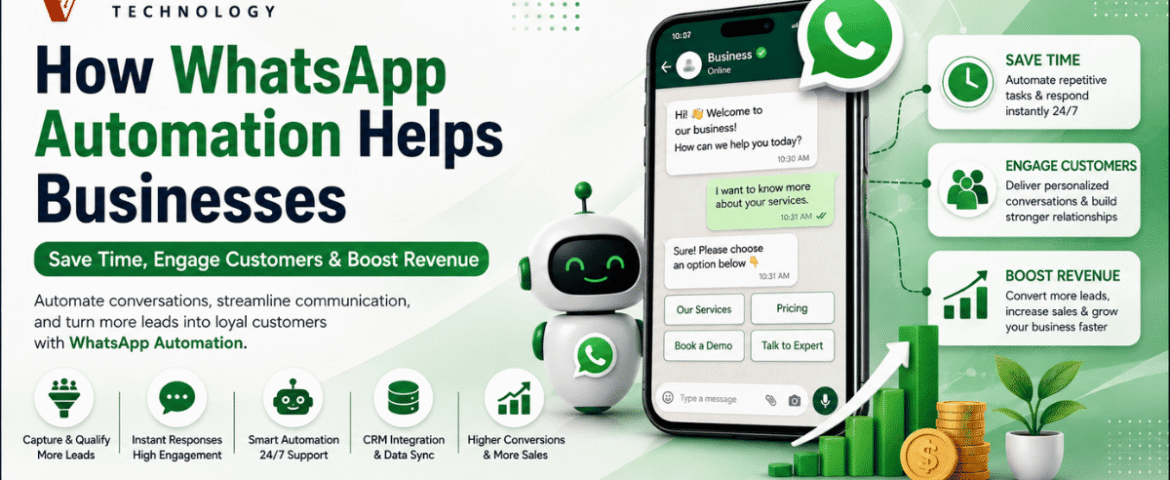
Introduction to the Power of WhatsApp Automation
In the modern digital economy, the speed and quality of customer communication can dictate the success or failure of a business. As traditional channels like email and phone calls become increasingly saturated, businesses are looking for more direct and effective ways to connect with their audiences. With over 3 billion people globally checking the app multiple times a day, WhatsApp has emerged as the premier platform for customer interaction. However, managing a massive influx of messages manually is impossible for growing teams. This is where WhatsApp automation becomes an essential strategy.
WhatsApp automation involves utilizing intelligent workflows, chatbots, and application programming interfaces (APIs) to handle conversations and send messages without requiring manual human intervention. Rather than being simple auto-responders, these systems provide smart, context-aware interactions that closely mimic human responses, allowing a business to scale its customer service seamlessly. By integrating WhatsApp automation, organizations can fundamentally transform their operations, significantly reducing manual effort while maximizing engagement and sales.
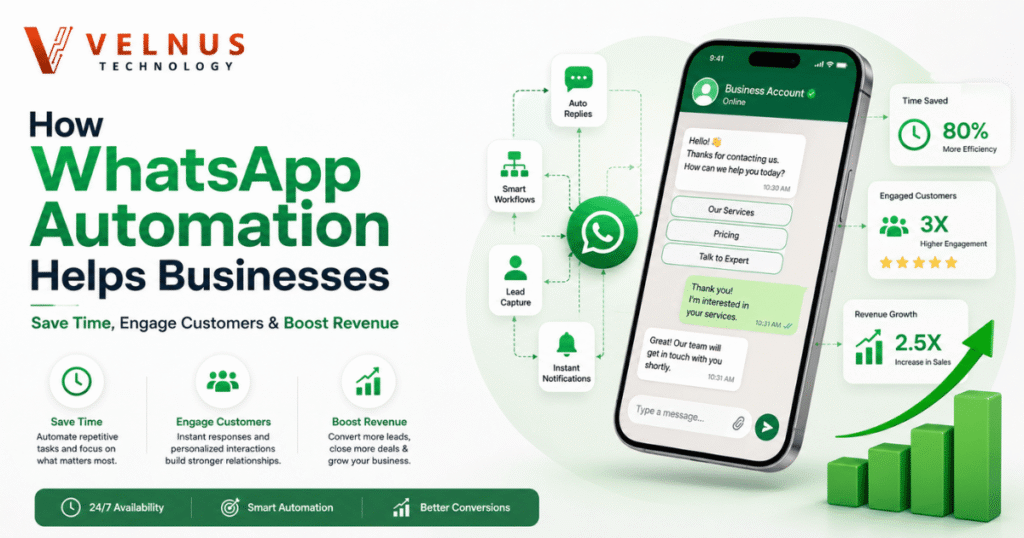
The Shift from Traditional Channels to Messaging
For years, businesses relied heavily on email marketing and standard customer service desks. Unfortunately, email campaigns today often struggle, typically yielding open rates of only around 20 percent and minimal click-through rates of 2 to 5 percent. Consumers are fatigued by cluttered inboxes and delayed email responses.
In stark contrast, WhatsApp campaigns achieve staggering open rates of 98 percent. Furthermore, click-through rates on automated WhatsApp messages range between 45 and 60 percent. This massive disparity exists because WhatsApp feels inherently personal, immediate, and conversational to the user. When a business leverages WhatsApp automation, they are placing their brand directly into an environment that customers already trust and check constantly.
How WhatsApp Automation Saves Time and Resources
One of the most immediate and measurable impacts of implementing WhatsApp automation is the sheer amount of time and effort it saves for internal teams. By automating routine interactions, businesses can reallocate their human resources to more complex, strategic tasks.
Providing True 24/7 Customer Support
Customers do not only browse products or experience issues during standard business hours. Decision-makers and consumers alike frequently research solutions late at night or on weekends. Most businesses simply cannot afford the overhead of maintaining a 24/7 human support team.
WhatsApp automation solves this by keeping your business available around the clock. Automated responses ensure that no inquiry goes unanswered, regardless of the time of day. Whether a customer is asking for a product catalog at midnight or requesting an appointment early Sunday morning, the automated system can acknowledge the request, provide the necessary information, or confirm a future meeting instantly. One sports facility that implemented such automation saved significant capital by avoiding the cost of hiring two full-time employees for off-hour shifts, all while providing continuous support.
Resolving Common Queries Instantly
A significant portion of incoming customer messages consists of repetitive, frequently asked questions (FAQs). Handling these manually creates bottlenecks and frustrates both customers and staff.
- WhatsApp automation efficiently handles routine repetitive tasks, instantly answering FAQs and freeing up support teams.
- Automated bots equipped with natural language processing can resolve up to 70 percent of customer queries automatically, without any human staff involvement.
- Implementing these automated responses can cut response times from several minutes down to mere seconds.
By deploying AI-driven chatbots to handle the bulk of basic inquiries, businesses report that their response times improve drastically, sometimes by as much as 90 to 97 percent. This immediate resolution keeps the customer satisfied and allows live agents to dedicate their time to high-value, complex problem-solving.
Streamlining Internal Workflows
Beyond customer-facing interactions, WhatsApp automation can also be utilized for internal communications and operational workflows.
- Automated notifications can deliver key updates to internal teams, resulting in 30 percent faster workflows and a reduction in manual errors.
- Large enterprises have successfully used WhatsApp bots to communicate critical updates to hundreds of thousands of workers simultaneously, ensuring everyone stays aligned.
Boosting Customer Engagement with WhatsApp
Engagement is the lifeblood of customer retention and brand loyalty. Because WhatsApp is a platform that consumers actively monitor, businesses leveraging automation can achieve unprecedented levels of interaction.
Leveraging Unmatched Visibility
When you send an automated message via email, it may sit unread for days. When you send it via WhatsApp, it is almost guaranteed to be seen immediately. WhatsApp automation ensures that campaigns, from simple birthday greetings to localized promotions, enjoy exceptional visibility. This directness makes the platform ideal for quickly raising brand awareness and ensuring critical marketing messages are actually consumed by the target audience.
Personalization at Scale
A common misconception about automation is that it feels cold and robotic. However, modern WhatsApp automation can be highly personalized and contextually relevant, which actively builds customer trust.
By integrating WhatsApp automation with your CRM platform, the system can dynamically pull specific customer data—such as their name, previous order history, or preferences—into the automated messages.
- A business can send a highly tailored message like: “Hi John, your Q3 order is ready for dispatch”.
- The system allows businesses to segment their audiences based on past behavior or interests, making future campaigns highly relevant.
- Customers appreciate receiving personalized tips and recommendations, which has been shown to drastically increase conversion rates.
Nurturing Leads Automatically
A slow reply can quickly cost a business a valuable deal. Many potential sales are lost simply because leads are not nurtured quickly or consistently enough.
WhatsApp automation ensures that no opportunity slips through the cracks by deploying automated follow-ups and continuous lead nurturing sequences. If a prospect abandons a booking or leaves a conversation, an automated message can gently nudge them to continue. Automated systems can even run interactive quizzes or chatbot flows to naturally qualify prospects and segment them before passing them to a human sales representative. Businesses utilizing automated follow-ups report seeing engagement levels 20 percent higher than when relying solely on manual follow-ups.
Driving Revenue Growth Through WhatsApp Automation
Ultimately, the goal of saving time and engaging customers is to drive bottom-line revenue. WhatsApp automation directly contributes to sales growth through several powerful mechanisms.
Recovering Abandoned Carts
In the e-commerce sector, shopping cart abandonment is a massive source of lost revenue. Customers frequently add items to their digital carts but leave the site before checking out.
- WhatsApp automation acts as a highly effective tool for abandoned cart recovery, instantly sending timely reminders or special promotional codes.
- Because the platform is so direct, these automated nudges can recover between 20 and 60 percent of otherwise lost sales.
- This strategy not only boosts conversions but also builds customer trust through helpful, rather than spammy, communication.
Upselling and Cross-Selling Strategies
Once a customer is engaged, automated systems can actively recommend complementary products or upgrades. Utilizing AI suggestions for upselling and cross-selling through WhatsApp can boost a business’s average order value by 25 to 35 percent. Additionally, features like in-chat payments allow customers to complete their purchases directly within the messaging interface via one-click checkout links, drastically reducing purchase friction and accelerating the sales cycle.
Lowering Customer Acquisition and Support Costs
Revenue growth is not just about making more sales; it is also about reducing operational expenses.
- WhatsApp automation can reduce overall customer support costs by up to 30 percent.
- By automating up to 80 percent of routine queries, companies can reduce their staffing needs for basic support by 40 percent, leading to rapid returns on investment.
- Automated lead qualification connected to ad campaigns can yield a 40 percent higher conversion rate, substantially lowering the cost of customer acquisition.
By successfully implementing these automated workflows, businesses globally are saving vast amounts of capital, freeing up resources for innovation and expansion.
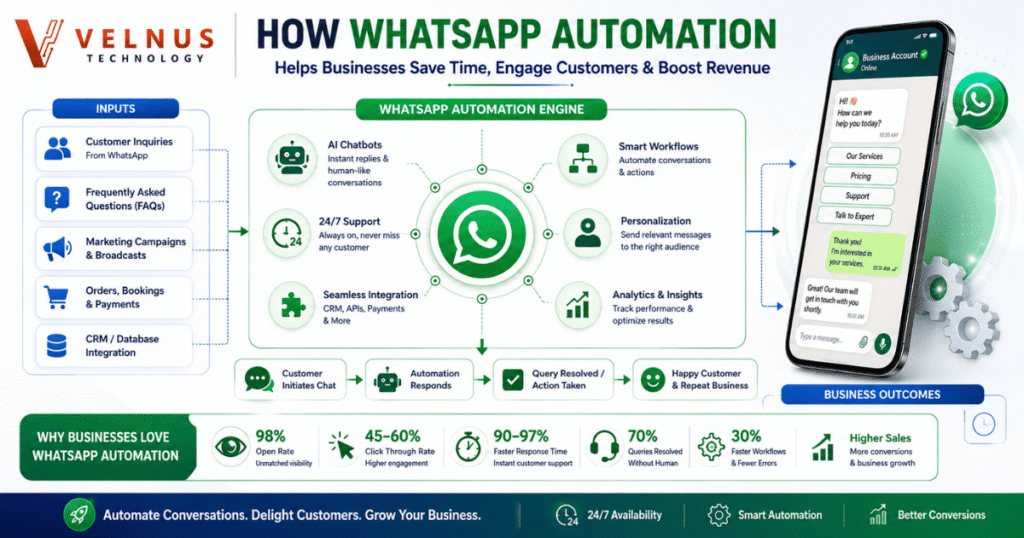
Why Partner with Velnus Technology for WhatsApp Automation?
To fully harness the capabilities of WhatsApp automation, businesses require a robust technological infrastructure and expert implementation. Velnus Technology stands out as a premier partner for organizations looking to scale their communication channels intelligently and efficiently.
Seamless Setup and Integration
Implementing an effective automation strategy requires proper configuration of the WhatsApp Business API, which serves as the backbone for sending automated workflows and integrating with existing software. Velnus Technology specializes in smoothly connecting your WhatsApp API with your current CRM tools, e-commerce platforms, and backend systems. This ensures that all customer data remains perfectly synced, allowing for smarter marketing and true personalization at scale.
Data-Driven Optimization
Automation is not a “set it and forget it” tool. To maximize revenue, the workflows must be continuously monitored and refined. Velnus Technology helps businesses track crucial metrics such as message open rates, click-through rates, and exact revenue generated from specific automated campaigns. By analyzing user drop-offs and interaction points, Velnus Technology ensures that your automated bots are continually optimized to prevent customer frustration and maximize the speed of pipeline velocity.
Essential Use Cases Across Industries
The versatility of WhatsApp automation means it can be adapted to serve almost any business model effectively.
E-commerce and Retail
For retail brands, automation handles order updates, delivery tracking, and abandoned cart reminders, which are critical for boosting conversions. Businesses can also instantly share their product catalogs within the chat, allowing users to browse and buy without ever leaving the app. Retailers frequently use the platform to send personalized promotions and loyalty rewards to dedicated customer segments.
Healthcare and Service Providers
In service-based industries like healthcare, missed appointments cost significant time and revenue. Automation solves this by sending automated appointment reminders 24 hours and one hour before the scheduled slot. This allows patients to confirm or reschedule easily, reducing no-show rates by as much as 30 percent and improving the overall patient experience.
Education and Finance
Educational institutions leverage automation to share admission updates, send fee reminders, and distribute exam notifications instantly to students and parents. In the financial sector, businesses streamline updates for loan applications, send secure payment reminders, and instantly answer routine queries, providing customers with faster, more reliable service.
Also Read : Grow Your Business Digitally With WhatsApp Automation: Convert More Leads & Increase Sales
Conclusion
The transition toward conversational commerce is no longer a future trend; it is the current reality. By leveraging WhatsApp automation, businesses can overcome the limitations of traditional communication channels like email and manual phone support. The platform’s staggering 98 percent open rate guarantees that your marketing and support messages are seen, while intelligent chatbots and workflows ensure that customers receive instant, personalized attention 24 hours a day.
Whether the goal is to recover abandoned digital shopping carts, reduce support costs by resolving routine queries automatically, or nurture leads seamlessly through the sales pipeline, WhatsApp automation delivers measurable, high-impact results. By partnering with experts like Velnus Technology, your organization can seamlessly integrate these powerful tools into your existing systems, ensuring you save valuable time, deeply engage your customer base, and continuously boost your revenue in an increasingly competitive digital marketplace.
Frequently Asked Questions (FAQs)
1. What exactly is WhatsApp automation?
WhatsApp automation involves utilizing intelligent tools such as workflows, chatbots, and APIs to automatically manage conversations, send scheduled messages, and interact with customers without requiring manual human effort.
2. Can automation really improve my customer service response times?
Yes. Automation can cut response times from minutes to mere seconds. By handling repetitive inquiries instantly through chatbots, some businesses have successfully reduced their response times by up to 97 percent.
3. How does WhatsApp automation directly boost revenue?
It drives revenue through several methods, primarily by sending automated reminders for abandoned shopping carts, which can recover 20 to 60 percent of lost sales. It also utilizes AI to suggest upsells and cross-sells, which can increase average order values by 25 to 35 percent.
4. Will my customers feel like they are just talking to a robot?
Not if configured correctly. Advanced automation uses the WhatsApp API to pull data directly from your CRM, allowing the system to personalize messages with the customer’s name, past order history, and preferences. This makes the interactions feel highly tailored and relevant.
5. Is WhatsApp automation suitable for my specific industry?
Absolutely. WhatsApp automation is highly adaptable. It is successfully used across various sectors, including e-commerce (for order updates), healthcare (for appointment reminders), finance (for loan updates), and education (for admission alerts). Velnus Technology can help customize these workflows specifically for your industry needs.
Leave A Comment