
- Mail Address info@velnustech.com
- Phone Number +91-90990-05498

Contact Info
- C-1024, Siddhivinayak Tower, Kataria Automobile Road Makarba, Ahmedabad - 380051
- +91 90990 05498
- info@velnustech.com
- Week Days: 09.00 to 18.00 Sunday: Closed
Messaging Marketing
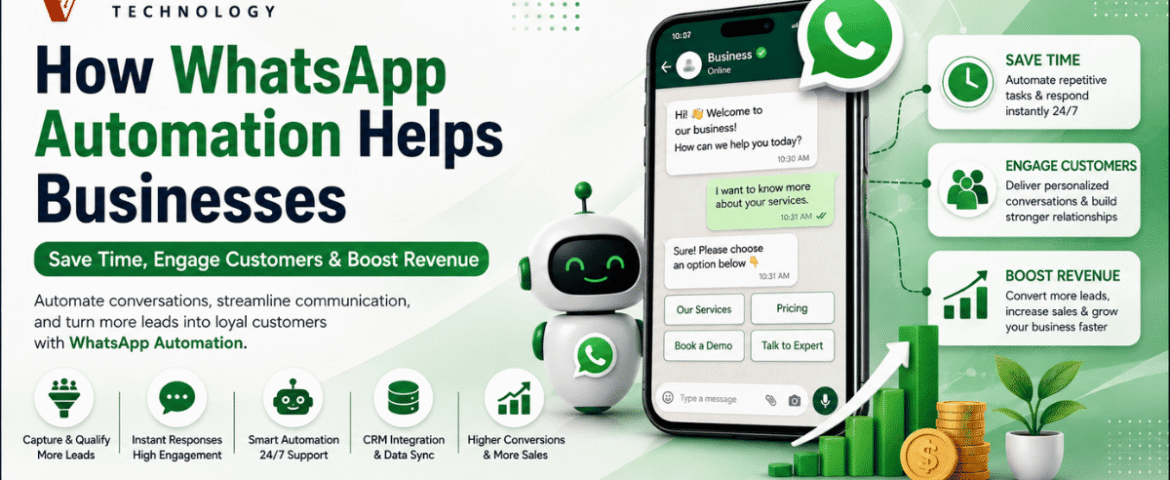
How WhatsApp Automation Helps Businesses Save Time, Engage Customers & Boost Revenue
- By KHUSHI LIMBASIYA
- 0 Comments
- Latest News technology
Introduction to the Power of WhatsApp Automation In the modern digital economy, the speed and quality of customer communication can dictate the success or failure of a business. As traditional channels like email and phone calls become increasingly saturated, businesses are looking for more direct and effective ways to connect with their audiences. With over 3 billion people globally checking the app multiple times a day, WhatsApp has emerged as the premier platform for customer interaction. However, managing a massive influx of messages manually is impossible for growing teams. This is where WhatsApp automation becomes an essential strategy. WhatsApp automation involves utilizing intelligent workflows, chatbots, and application programming interfaces (APIs) to handle conversations and send messages without requiring manual human intervention. Rather than being simple auto-responders, these systems provide smart, context-aware interactions that closely mimic human responses, allowing a business to scale its customer service seamlessly. By integrating WhatsApp automation, organizations can fundamentally transform their operations, significantly reducing manual effort while maximizing engagement and sales. The Shift from Traditional Channels to Messaging For years, businesses relied heavily on email marketing and standard customer service desks. Unfortunately, email campaigns today often struggle, typically yielding open rates of only around 20 percent and minimal click-through rates of 2 to 5 percent. Consumers are fatigued by cluttered inboxes and delayed email responses. In stark contrast, WhatsApp campaigns achieve staggering open rates of 98 percent. Furthermore, click-through rates on automated WhatsApp messages range between 45 and 60 percent. This massive disparity exists because WhatsApp feels inherently personal, immediate, and conversational to the user. When a business leverages WhatsApp automation, they are placing their brand directly into an environment that customers already trust and check constantly. How WhatsApp Automation Saves Time and Resources One of the most immediate and measurable impacts of implementing WhatsApp automation is the sheer amount of time and effort it saves for internal teams. By automating routine interactions, businesses can reallocate their human resources to more complex, strategic tasks. Providing True 24/7 Customer Support Customers do not only browse products or experience issues during standard business hours. Decision-makers and consumers alike frequently research solutions late at night or on weekends. Most businesses simply cannot afford the overhead of maintaining a 24/7 human support team. WhatsApp automation solves this by keeping your business available around the clock. Automated responses ensure that no inquiry goes unanswered, regardless of the time of day. Whether a customer is asking for a product catalog at midnight or requesting an appointment early Sunday morning, the automated system can acknowledge the request, provide the necessary information, or confirm a future meeting instantly. One sports facility that implemented such automation saved significant capital by avoiding the cost of hiring two full-time employees for off-hour shifts, all while providing continuous support. Resolving Common Queries Instantly A significant portion of incoming customer messages consists of repetitive, frequently asked questions (FAQs). Handling these manually creates bottlenecks and frustrates both customers and staff. By deploying AI-driven chatbots to handle the bulk of basic inquiries, businesses report that their response times improve drastically, sometimes by as much as 90 to 97 percent. This immediate resolution keeps the customer satisfied and allows live agents to dedicate their time to high-value, complex problem-solving. Streamlining Internal Workflows Beyond customer-facing interactions, WhatsApp automation can also be utilized for internal communications and operational workflows. Boosting Customer Engagement with WhatsApp Engagement is the lifeblood of customer retention and brand loyalty. Because WhatsApp is a platform that consumers actively monitor, businesses leveraging automation can achieve unprecedented levels of interaction. Leveraging Unmatched Visibility When you send an automated message via email, it may sit unread for days. When you send it via WhatsApp, it is almost guaranteed to be seen immediately. WhatsApp automation ensures that campaigns, from simple birthday greetings to localized promotions, enjoy exceptional visibility. This directness makes the platform ideal for quickly raising brand awareness and ensuring critical marketing messages are actually consumed by the target audience. Personalization at Scale A common misconception about automation is that it feels cold and robotic. However, modern WhatsApp automation can be highly personalized and contextually relevant, which actively builds customer trust. By integrating WhatsApp automation with your CRM platform, the system can dynamically pull specific customer data—such as their name, previous order history, or preferences—into the automated messages. Nurturing Leads Automatically A slow reply can quickly cost a business a valuable deal. Many potential sales are lost simply because leads are not nurtured quickly or consistently enough. WhatsApp automation ensures that no opportunity slips through the cracks by deploying automated follow-ups and continuous lead nurturing sequences. If a prospect abandons a booking or leaves a conversation, an automated message can gently nudge them to continue. Automated systems can even run interactive quizzes or chatbot flows to naturally qualify prospects and segment them before passing them to a human sales representative. Businesses utilizing automated follow-ups report seeing engagement levels 20 percent higher than when relying solely on manual follow-ups. Driving Revenue Growth Through WhatsApp Automation Ultimately, the goal of saving time and engaging customers is to drive bottom-line revenue. WhatsApp automation directly contributes to sales growth through several powerful mechanisms. Recovering Abandoned Carts In the e-commerce sector, shopping cart abandonment is a massive source of lost revenue. Customers frequently add items to their digital carts but leave the site before checking out. Upselling and Cross-Selling Strategies Once a customer is engaged, automated systems can actively recommend complementary products or upgrades. Utilizing AI suggestions for upselling and cross-selling through WhatsApp can boost a business’s average order value by 25 to 35 percent. Additionally, features like in-chat payments allow customers to complete their purchases directly within the messaging interface via one-click checkout links, drastically reducing purchase friction and accelerating the sales cycle. Lowering Customer Acquisition and Support Costs Revenue growth is not just about making more sales; it is also about reducing operational expenses. By successfully implementing these automated workflows, businesses globally are saving vast amounts of capital, freeing up resources for innovation and expansion.
WhatsApp Marketing: The Complete Guide to Growing Your Business
- By KHUSHI LIMBASIYA
- 0 Comments
- technology Latest News
What is WhatsApp Marketing? WhatsApp marketing is a communication strategy that uses WhatsApp to connect with customers, promote products or services, provide support, send updates, and build long-term relationships. With billions of active users worldwide, WhatsApp has become one of the most effective messaging platforms for businesses that want direct and personalized communication. Unlike traditional marketing channels, WhatsApp enables real-time conversations. Messages are delivered instantly, allowing businesses to interact with customers in a more engaging and convenient way. From sharing promotional offers to answering customer queries, WhatsApp marketing creates a seamless communication experience. The platform supports text messages, images, videos, PDFs, voice notes, product catalogs, and interactive buttons, making it a versatile marketing tool for businesses of all sizes. Why WhatsApp Marketing is Important Customer expectations have changed significantly over the years. People prefer quick responses, personalized communication, and convenient support. WhatsApp fulfills these expectations by offering a familiar and user-friendly platform. Some major reasons why WhatsApp marketing has become important include: Businesses that communicate effectively through WhatsApp often experience stronger customer loyalty and better conversion rates. Benefits of WhatsApp Marketing High Open Rates WhatsApp messages are generally opened much faster than emails or SMS. This allows businesses to deliver important information quickly. Instant Customer Communication Customers can receive updates, ask questions, and get immediate responses without waiting for long email replies. Personalized Customer Experience Businesses can send personalized messages based on customer interests, previous purchases, or inquiries, creating a more meaningful interaction. Multimedia Support WhatsApp supports: This makes marketing campaigns more engaging than plain text messages. Improved Customer Support Customers appreciate fast assistance. Businesses can resolve queries, handle complaints, and provide after-sales support directly through WhatsApp. Cost-Effective Marketing Compared to many advertising channels, WhatsApp marketing requires relatively low investment while offering excellent engagement. Better Customer Retention Regular communication helps businesses stay connected with existing customers, increasing repeat purchases and long-term loyalty. How WhatsApp Marketing Works WhatsApp marketing begins by obtaining customer consent before sending messages. Businesses should always communicate with users who have voluntarily agreed to receive updates. The typical workflow includes: Building a Contact List Collect customer phone numbers through: Always ensure customers provide permission before messaging them. Segmenting Your Audience Not every customer has the same interests. Organizing contacts into groups improves message relevance. Examples include: Segmentation improves engagement and reduces unnecessary messaging. Creating Valuable Content Effective WhatsApp marketing focuses on delivering value rather than constant promotions. Useful content includes: Sending Messages at the Right Time Timing plays an important role in customer engagement. Avoid sending messages: Choose times when customers are more likely to read and respond. Types of WhatsApp Marketing Campaigns Promotional Campaigns Promotional campaigns inform customers about: Lead Generation Campaigns Businesses can capture potential customers by encouraging users to request information or inquire about services. Customer Support Campaigns Support messages improve customer satisfaction by providing: Feedback Campaigns Customer opinions help improve products and services. Businesses can request: Event Marketing WhatsApp is useful for promoting: Reminder Campaigns Reminder messages help customers remember: Features That Make WhatsApp Marketing Effective Rich Media Messaging Businesses can share attractive content through: Visual content usually performs better than plain text. Quick Replies Frequently asked questions can be answered quickly using predefined responses, saving time and improving efficiency. Automated Responses Automation allows businesses to: Automation ensures customers receive immediate responses even outside working hours. Labels and Contact Organization Contacts can be organized using labels for better management and faster follow-up. Broadcast Messaging Broadcast messages allow businesses to send updates to multiple customers individually without creating group conversations. Interactive Buttons Interactive buttons simplify customer actions by allowing them to: Best Practices for WhatsApp Marketing Obtain Customer Consent Always receive permission before sending marketing messages. Respecting customer preferences builds trust and complies with communication standards. Personalize Every Message Use customer names and tailor content according to their interests whenever possible. Keep Messages Short People prefer concise and easy-to-read messages. Avoid lengthy paragraphs. Provide Value Every message should offer something useful, such as: Avoid Excessive Messaging Sending too many promotional messages may cause customers to ignore future communications or unsubscribe. Use High-Quality Images Professional visuals improve customer engagement and increase the effectiveness of marketing campaigns. Include Clear Calls-to-Action Encourage customers to take action using simple instructions such as: Common WhatsApp Marketing Strategies Product Announcements Inform customers whenever new products or services become available. Exclusive Offers Reward subscribers with special discounts available only through WhatsApp. Customer Education Share educational content that helps customers understand products, services, or industry trends. Seasonal Promotions Plan campaigns around holidays, festivals, and shopping seasons. Limited-Time Offers Create urgency by promoting offers available for a short duration. Loyalty Programs Reward repeat customers with exclusive promotions and early access to new products. Abandoned Inquiry Follow-Up Reconnect with potential customers who previously expressed interest but did not complete their purchase or inquiry. Content Ideas for WhatsApp Marketing Businesses can regularly share: Educational Tips Provide useful information related to your industry. Product Demonstrations Show how products work through short videos or images. Customer Success Stories Share real experiences that highlight positive outcomes. Behind-the-Scenes Content Offer customers a glimpse into product creation, daily operations, or company culture without revealing confidential information. Polls and Surveys Ask customers for opinions to encourage interaction. Frequently Asked Questions Answer common questions proactively to reduce support requests. Common Mistakes to Avoid Sending Messages Without Permission Unsolicited messaging can damage customer trust and reduce engagement. Ignoring Customer Responses WhatsApp is designed for conversations. Respond promptly to customer inquiries. Overloading Customers Sending too many promotional messages may lead customers to stop engaging. Poor Quality Content Low-quality images, unclear messages, and spelling mistakes reduce professionalism. Inconsistent Communication Long periods without communication followed by excessive messaging create an inconsistent customer experience. Not Segmenting Contacts Sending identical messages to every customer often results in lower engagement. Measuring WhatsApp Marketing Performance Successful campaigns should be measured regularly. Key performance indicators include: Message Delivery Rate Measures how many messages successfully reach customers. Open Rate Indicates how many recipients view your messages. Response Rate Shows how many