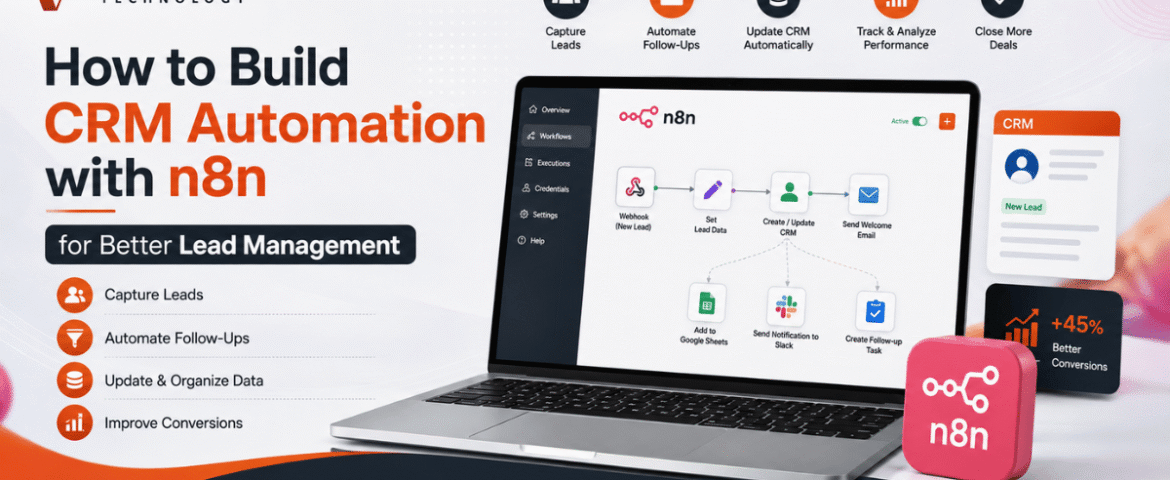
Generating and managing leads manually is one of the biggest challenges for growing businesses. As the number of inquiries increases, manually updating customer records, assigning follow-ups, and sending emails becomes time-consuming and prone to errors. This is where CRM Automation becomes a game changer. With n8n, businesses can automate repetitive CRM tasks without relying on expensive enterprise software or complex coding. Whether leads come from contact forms, social media campaigns, WhatsApp, Google Sheets, landing pages, or email, n8n can connect multiple platforms and automatically manage every step of the lead lifecycle. In this guide, you’ll learn how to build CRM Automation with n8n, create automated lead management workflows, improve response times, reduce manual work, and increase conversion rates. Why CRM Automation Matters Every business receives leads from different sources. Without automation, teams often face problems such as: CRM Automation removes these issues by automatically capturing, organizing, qualifying, and tracking leads. Some major advantages include: What is n8n? n8n is an open-source workflow automation platform that allows users to connect applications through visual workflows. Instead of writing lengthy code, users create automation using drag-and-drop nodes. n8n supports hundreds of integrations including: Its flexibility makes it one of the most powerful automation tools for CRM Automation. Why Use n8n for CRM Automation? Unlike traditional automation platforms, n8n provides complete workflow customization. Benefits include: No-Code and Low-Code Automation Business users can create workflows visually without programming knowledge. Multiple Integrations Connect multiple lead sources into one workflow. Self-Hosted Option Maintain full control over customer data. Advanced Logic Use conditions, loops, filters, delays, and custom scripts. Cost-Effective Reduce software expenses while building powerful automation. Essential Components of CRM Automation A complete CRM Automation workflow usually contains several stages. Lead Capture Collect leads from: Lead Validation Automatically verify: Lead Qualification Assign scores based on: Lead Assignment Automatically assign qualified leads to sales representatives. Follow-Up Automation Trigger: Activity Tracking Log every interaction inside the CRM automatically. Step 1: Connect Your Lead Sources The first workflow starts with lead collection. Common lead sources include: Website Contact Forms Whenever someone submits a form, n8n instantly receives the information. Collected information may include: Landing Pages Automatically push landing page submissions into your CRM. Social Media Leads Capture leads generated through advertising campaigns without manual downloads. WhatsApp Collect customer details directly from incoming conversations. Google Sheets Automatically monitor new spreadsheet entries. Step 2: Clean and Validate Lead Data Poor-quality data reduces CRM performance. n8n can automatically: Remove Duplicate Leads Search the CRM before adding new contacts. Verify Email Addresses Ensure emails follow valid formats. Format Phone Numbers Standardize country codes and mobile numbers. Normalize Customer Data Convert names into consistent formats. Example: Instead of: john smith The workflow stores: John Smith Step 3: Automatically Create CRM Records After validation, n8n creates new customer records. Each CRM entry may include: Everything happens automatically. Step 4: Lead Scoring Automation Not every lead has equal value. CRM Automation can assign scores using conditions. Example scoring: Total score determines priority. High-value leads receive immediate attention. Step 5: Assign Leads Automatically Instead of manually distributing leads, n8n can assign them based on rules. Examples: Round Robin Assignment Each sales member receives leads equally. Region-Based Assignment Assign according to customer location. Product-Based Assignment Different products go to different teams. Industry-Based Assignment Healthcare, retail, manufacturing, education, and technology leads go to specialists. Step 6: Trigger Instant Customer Responses Customers expect quick replies. CRM Automation allows immediate communication. Possible actions: Instant responses improve customer satisfaction. Step 7: Notify Sales Teams Sales teams receive instant alerts whenever new leads arrive. Notifications may be sent through: Notifications contain: Step 8: Schedule Follow-Up Activities Follow-ups are critical for lead conversion. n8n can automatically: No opportunity gets forgotten. Step 9: Update Lead Status Automatically Every interaction updates the CRM. Status examples: Sales pipelines remain accurate without manual updates. Step 10: Generate Reports Automatically CRM Automation can generate reports including: Daily Lead Reports Monitor new inquiries. Weekly Performance Reports Evaluate sales productivity. Conversion Reports Measure lead-to-customer ratio. Source Analysis Identify top-performing lead sources. Sales Pipeline Reports Understand deal progress. Reports can be emailed automatically. Popular n8n CRM Automation Workflows Website Form to CRM Automatically collect website inquiries and create CRM records. Google Sheets to CRM Import spreadsheet leads instantly. Email to CRM Convert incoming inquiries into customer records. WhatsApp to CRM Store conversations and customer details automatically. CRM to Email Marketing Send targeted campaigns based on CRM data. CRM to Calendar Schedule meetings automatically. CRM Reminder Workflow Send reminders before follow-up dates. Best Practices for CRM Automation Keep Workflows Simple Begin with basic automations before adding advanced logic. Eliminate Duplicate Records Prevent duplicate customers from entering the CRM. Use Lead Scoring Prioritize high-value opportunities. Maintain Data Quality Validate every incoming lead. Monitor Workflow Performance Regularly review execution logs. Secure Customer Information Use secure authentication and encrypted connections. Test Before Deployment Verify every workflow with sample data. Common CRM Automation Mistakes Avoid these mistakes: Overcomplicated Workflows Complex automation becomes difficult to maintain. Ignoring Error Handling Always create backup paths for failures. Missing Notifications Ensure failed workflows generate alerts. Poor Data Validation Invalid customer information reduces CRM accuracy. No Workflow Documentation Document automation logic for future updates. Advanced CRM Automation Ideas Once the basic workflow is running, additional automation can include: Benefits of CRM Automation with n8n Businesses using CRM Automation experience several long-term benefits. These include: Automation allows teams to spend more time building customer relationships instead of performing repetitive administrative tasks. Also Read : AI Workflow Automation with n8n: Build Smarter Business Processes Conclusion CRM Automation with n8n transforms the way businesses capture, organize, and manage leads. Instead of manually updating records, assigning leads, and sending follow-up messages, every process can run automatically through intelligent workflows. From lead collection and validation to scoring, assignment, notifications, reporting, and customer communication, n8n helps streamline the entire sales pipeline. As your business grows, automated workflows ensure consistency, improve efficiency, reduce errors, and enable faster responses that lead to higher conversion rates. By implementing CRM Automation with

What Is WhatsApp Chat Automation? WhatsApp Chat Automation is the process of using automated workflows, predefined responses, and intelligent messaging to communicate with customers on WhatsApp without requiring manual intervention for every conversation. It helps businesses respond instantly, streamline communication, and improve customer experiences by handling routine interactions efficiently. Instead of manually answering repetitive questions, automation ensures customers receive immediate and accurate responses based on predefined triggers. Whether it’s welcoming new customers, confirming appointments, sharing order updates, or answering frequently asked questions, WhatsApp Chat Automation simplifies communication while saving valuable time. As customer expectations for instant support continue to rise, chat automation has become an essential solution for businesses looking to provide fast, reliable, and consistent communication. Why WhatsApp Chat Automation Is Important Modern customers expect quick replies and seamless communication. Delayed responses often lead to missed opportunities and lower customer satisfaction. Chat automation helps businesses maintain responsiveness around the clock. Some major advantages include: Automation ensures customers never feel ignored, even during weekends, holidays, or outside business hours. How WhatsApp Chat Automation Works WhatsApp Chat Automation works by following predefined rules and triggers. Whenever a customer performs a specific action, the automation system sends an appropriate response. Common automation triggers include: These workflows operate automatically, reducing repetitive tasks while maintaining smooth communication. Key Features of WhatsApp Chat Automation Instant Automated Replies Customers receive immediate responses after sending a message, ensuring they know their inquiry has been received. Welcome Messages Welcome messages greet new customers and provide helpful information as soon as they start a conversation. Example: “Hello! Thank you for contacting us. We’re happy to assist you today.” Away Messages Away messages notify customers when support is unavailable while assuring them that assistance will be provided during business hours. Frequently Asked Question Responses Automation can instantly answer common customer questions regarding: This significantly reduces support workload. Appointment Reminders Automated reminders help customers remember upcoming appointments, reducing missed bookings. Order Updates Customers appreciate receiving timely notifications throughout the ordering process, including: Payment Notifications Automation can notify customers about successful payments, pending invoices, and upcoming due dates. Follow-Up Messages Follow-up messages help maintain customer engagement after purchases or completed services. These messages may include: Benefits of WhatsApp Chat Automation Saves Valuable Time Automation handles repetitive conversations automatically, allowing staff to focus on higher-value customer interactions. Improves Customer Satisfaction Customers receive immediate replies instead of waiting for manual responses. Fast communication creates a better overall experience. Reduces Human Errors Predefined messages ensure consistent and accurate communication across every conversation. Increases Productivity Support teams can manage significantly more conversations without increasing workload. Enhances Customer Engagement Regular communication keeps customers informed and encourages continued interaction. Supports Business Growth As customer inquiries increase, automation can easily scale to manage higher conversation volumes. Provides Consistent Communication Every customer receives standardized information, ensuring reliable service quality. Common Use Cases WhatsApp Chat Automation is widely used for: Customer Support Provide instant assistance for common questions and service requests. Appointment Scheduling Automatically confirm bookings and remind customers before appointments. Order Management Keep customers informed throughout the purchasing journey. Delivery Notifications Send automatic shipping and delivery updates. Payment Reminders Notify customers before payment deadlines. Customer Onboarding Guide new customers through products or services using automated message sequences. Feedback Collection Request reviews and customer feedback after completing transactions. Marketing Campaigns Share announcements, promotions, and product launches through automated messaging workflows. Event Notifications Automatically remind participants about upcoming events or schedule changes. Best Practices for WhatsApp Chat Automation Keep Messages Simple Use short and clear language that customers can understand easily. Avoid unnecessary technical terms. Personalize Conversations Including customer names or relevant details creates a more engaging experience. Personalized communication feels natural and improves customer satisfaction. Respond Instantly Immediate responses reassure customers that their messages have been received. Automation should activate without unnecessary delays. Use Professional Language Maintain a polite, friendly, and professional tone throughout every conversation. Avoid Excessive Messaging Sending too many automated messages can overwhelm customers. Only send messages that provide value. Regularly Test Automation Review workflows frequently to ensure messages are delivered correctly and contain accurate information. Update Information Business hours, pricing, services, and contact information should always remain current. Mistakes to Avoid Creating Robotic Conversations Automation should sound natural rather than repetitive or mechanical. Friendly language improves customer engagement. Ignoring Customer Intent Automation should recognize different customer needs instead of providing identical responses to every inquiry. Overcomplicating Workflows Simple conversation paths create better customer experiences. Complicated automation often confuses users. Forgetting Human Support Customers should always have the option to speak with a support representative when automation cannot resolve their issue. Failing to Review Performance Regular performance monitoring helps identify opportunities for improvement. Analytics can reveal message effectiveness and customer engagement levels. Tips for Successful WhatsApp Chat Automation Focus on Customer Experience Every automated message should provide useful information or solve a customer problem. Create Clear Conversation Flows Customers should always understand the next step in the conversation. Examples include: Optimize Response Timing Deliver messages immediately after customer actions to maintain engagement. Review Customer Feedback Customer opinions help improve automation quality and communication effectiveness. Continuously Improve Workflows Automation should evolve based on customer behavior and changing business needs. Regular updates ensure long-term effectiveness. Industries That Benefit from WhatsApp Chat Automation Many industries successfully use automation, including: Automation improves communication wherever customer interactions are essential. Future of WhatsApp Chat Automation Automation technology continues to evolve rapidly. Future developments may include: As digital communication continues to grow, WhatsApp Chat Automation will become even more valuable for businesses seeking faster and more personalized customer interactions. Also Read : Top 10 Best WhatsApp API Solutions: A Complete Guide to Choosing the Right One Conclusion WhatsApp Chat Automation has transformed customer communication by delivering instant, reliable, and consistent responses without requiring constant manual effort. From welcome messages and appointment reminders to order updates and follow-up conversations, automation helps businesses improve efficiency while enhancing the customer experience. By implementing well-designed automation workflows, organizations can save time, reduce repetitive tasks, increase productivity, and maintain
What Is a WhatsApp API? A Best WhatsApp API is a communication solution that enables businesses to send and receive WhatsApp messages at scale. Unlike the standard WhatsApp application, an API allows businesses to automate conversations, manage customer interactions, integrate with existing systems, and handle multiple chats efficiently. It is designed for businesses that require reliable, secure, and scalable messaging to improve customer communication. Why Use a WhatsApp API? A WhatsApp API helps businesses communicate with customers faster while improving efficiency and customer satisfaction. Key benefits include: Features of the Best WhatsApp API Fast Message Delivery A quality WhatsApp API delivers messages quickly, ensuring customers receive important updates without delays. Automation Automation allows businesses to send welcome messages, appointment reminders, order updates, follow-ups, and notifications automatically. Multi-User Access Multiple team members can manage customer conversations from a single platform, improving collaboration and response speed. CRM Integration The best WhatsApp API integrates with CRM systems to keep customer information organized and improve communication workflows. Chat Management Businesses can organize conversations, assign chats to team members, and monitor customer interactions efficiently. Rich Media Support A WhatsApp API supports sending: Rich media improves communication and customer engagement. Broadcast Messaging Businesses can send important announcements or promotional messages to multiple customers simultaneously while maintaining message quality. Real-Time Notifications Automated notifications help customers stay informed with updates such as: Secure Communication The best APIs provide secure messaging to protect customer information and maintain reliable communication. Benefits of Using the Best WhatsApp API Improves Customer Support Customers receive faster responses, reducing waiting times and increasing satisfaction. Saves Time Automation handles repetitive tasks, allowing teams to focus on complex customer requests. Increases Productivity Employees manage more conversations in less time with organized chat management and automation. Boosts Customer Engagement Quick responses and personalized communication encourage stronger customer relationships. Reduces Manual Work Routine tasks such as confirmations, reminders, and follow-ups are handled automatically. Supports Business Growth As customer inquiries increase, a scalable WhatsApp API can handle higher message volumes without compromising performance. Important Features to Look For Easy Integration Choose an API that integrates smoothly with your existing software and business tools. Reliable Performance Consistent uptime and fast message delivery are essential for uninterrupted communication. Automation Capabilities Look for features such as: Analytics Performance reports help businesses understand: Scalability The API should support increasing customer conversations as your business grows. User-Friendly Dashboard A simple interface helps teams manage conversations efficiently without extensive training. Common Use Cases Businesses use WhatsApp APIs for: Customer Support Provide instant assistance and resolve customer queries quickly. Lead Generation Capture inquiries and engage potential customers efficiently. Appointment Scheduling Automatically confirm appointments and send reminders. Order Updates Notify customers about order confirmation, shipping, and delivery status. Payment Notifications Send payment reminders and confirmations automatically. Feedback Collection Request customer reviews after completing purchases or services. Marketing Campaigns Share product launches, special offers, and important announcements with customers. Customer Onboarding Guide new customers through products or services with automated welcome messages. Best Practices Respond Quickly Fast replies improve customer satisfaction and increase engagement. Personalize Messages Use customer names and relevant information whenever possible. Keep Messages Short Clear and concise messages are easier to read and understand. Send Relevant Information Only send messages that provide value to the customer. Monitor Performance Review messaging reports regularly to improve communication strategies. Update Automated Messages Keep information accurate by reviewing message templates periodically. Mistakes to Avoid Sending Too Many Messages Excessive messaging may reduce customer engagement. Ignoring Customer Replies Automation should complement human support, not replace it completely. Using Confusing Language Simple communication improves customer understanding. Poor Workflow Design Well-organized automation creates a better customer experience. Failing to Test Integrations Regular testing helps prevent delivery issues and communication errors. How to Choose the Best WhatsApp API When selecting a WhatsApp API, consider the following factors: Choosing a solution that aligns with your communication goals ensures better long-term results. Future of WhatsApp APIs Messaging technology continues to evolve with advanced automation and smarter communication features. Future improvements may include: As businesses continue adopting conversational communication, WhatsApp APIs will remain an essential tool for customer engagement. Also Read : Automated WhatsApp Messages: The Complete Guide to Smarter Customer Communication Conclusion A high-quality WhatsApp API enables businesses to communicate faster, automate repetitive tasks, improve customer satisfaction, and manage conversations efficiently. From customer support and order updates to appointment reminders and marketing campaigns, a reliable API helps streamline communication while saving valuable time. By selecting an API with strong automation, security, scalability, and integration capabilities, businesses can build better customer relationships and support long-term growth. Frequently Asked Questions (FAQs) Q1. What is a WhatsApp API? A WhatsApp API is a messaging solution that allows businesses to automate and manage customer conversations at scale. Q2. Why should businesses use a WhatsApp API? It improves customer communication, automates repetitive tasks, increases efficiency, and supports business growth. Q3. Can a WhatsApp API send automated messages? Yes. It can send welcome messages, reminders, order confirmations, notifications, and follow-up messages automatically. Q4. Is a WhatsApp API suitable for small businesses? Yes. Businesses of all sizes can use a WhatsApp API to improve communication and customer support. Q5. Can multiple users manage chats? Yes. Most WhatsApp APIs support multiple users handling customer conversations simultaneously.