
- Mail Address info@velnustech.com
- Phone Number +91-90990-05498

Contact Info
- C-1024, Siddhivinayak Tower, Kataria Automobile Road Makarba, Ahmedabad - 380051
- +91 90990 05498
- info@velnustech.com
- Week Days: 09.00 to 18.00 Sunday: Closed
automation software
10 Powerful n8n Integrations That Can Transform Your Business Workflow
- By KHUSHI LIMBASIYA
- 0 Comments
- Latest News technology
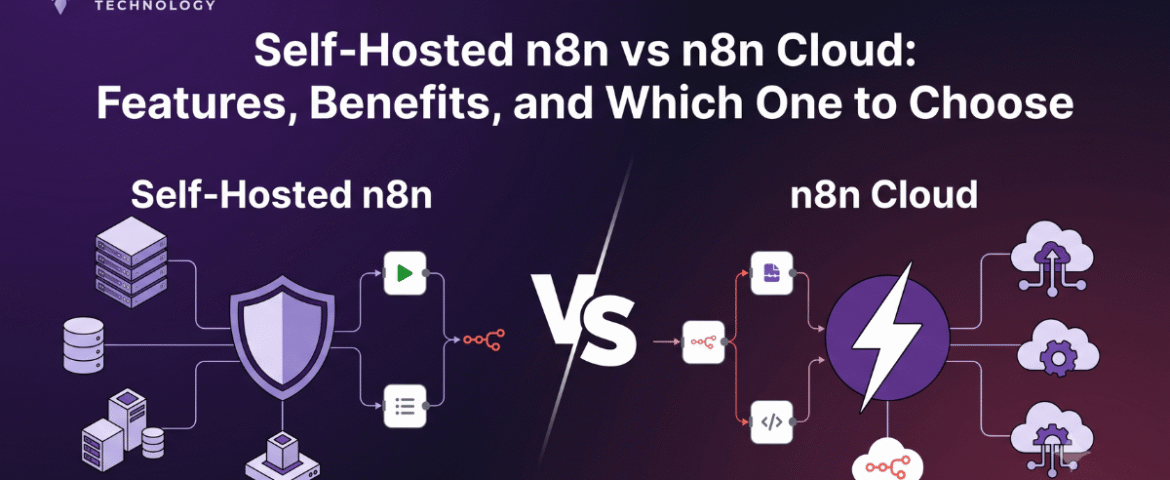
n8n integrations streamline workflows by automating the connections between various applications, allowing for seamless data transfer and communication. By leveraging these integrations, businesses can reduce manual input, minimize errors, and enhance overall efficiency. Implementing n8n integrations not only saves time but also empowers teams to focus on strategic tasks that drive growth and innovation. Embracing these powerful tools can significantly enhance operational effectiveness and competitive advantage. n8n is a flexible workflow automation platform that allows businesses to connect hundreds of applications and automate repetitive tasks without writing complex code. Whether you’re managing leads, sending notifications, syncing customer data, or generating reports, n8n helps create seamless workflows that improve efficiency and reduce manual effort. The real power of n8n lies in its ability to integrate with popular business applications. By connecting multiple services into one automated workflow, organizations can save time, improve accuracy, and scale operations with minimal human intervention. In this article, we’ll explore the 10 most powerful n8n integrations that can transform your business workflow and help you automate smarter. Why n8n Integrations Matter Modern businesses often use multiple software platforms simultaneously. Without automation, employees spend hours copying data, sending updates, creating reports, and managing repetitive tasks. Using n8n integrations offers several advantages: Instead of manually transferring information between platforms, n8n automates the entire process. 1. Google Sheets Integration Automate Data Management Google Sheets remains one of the most commonly used tools for storing and organizing business data. Integrating it with n8n enables automatic data synchronization from multiple platforms. Common Automation Ideas Benefits 2. Gmail Integration Automate Email Workflows Email remains an essential communication channel for every business. With n8n, Gmail workflows become fully automated. Automation Examples Benefits 3. Slack Integration Improve Team Communication Internal communication becomes much more efficient when Slack is integrated into automated workflows. Automation Examples Benefits 4. Trello Integration Simplify Project Management Project management becomes easier when task creation happens automatically. Automation Ideas Benefits 5. Discord Integration Automate Community Communication Many online communities and internal teams use Discord for communication. Workflow Ideas Benefits 6. Telegram Integration Send Instant Notifications Telegram is widely used for personal and business communication. Automation Examples Benefits 7. Airtable Integration Organize Business Information Airtable combines spreadsheet simplicity with database functionality. Automation Possibilities Benefits 8. Notion Integration Automate Documentation Notion is increasingly used for documentation, knowledge management, and project planning. Workflow Examples Benefits 9. HubSpot Integration Streamline Sales Processes Sales teams benefit significantly from workflow automation. Automation Ideas Benefits 10. OpenAI Integration Add AI to Your Business Workflow Artificial intelligence is transforming business operations. Combining AI with n8n enables intelligent automation. Workflow Examples Benefits Additional n8n Integration Ideas Beyond the top ten integrations, n8n supports hundreds of additional applications that help businesses automate nearly every workflow. Popular automation categories include: Marketing Automation Sales Automation Customer Support HR Automation Finance Automation Benefits of Using n8n Integrations Businesses adopting n8n integrations experience improvements across multiple departments. Increased Productivity Employees spend less time on repetitive work and more time on strategic tasks. Reduced Errors Automation minimizes mistakes caused by manual data entry. Faster Decision Making Real-time data synchronization provides accurate business information instantly. Cost Savings Automation reduces operational costs by minimizing manual processes. Better Customer Experience Customers receive quicker responses, faster updates, and more reliable service. Flexible Customization Businesses can build workflows tailored to their exact requirements. Scalability As businesses grow, workflows can easily expand without increasing manual workload. Secure Automation Self-hosted deployment options provide greater control over sensitive business data. Best Practices for Building n8n Integrations Creating efficient workflows requires thoughtful planning. Identify Repetitive Tasks Begin with processes performed every day or every week. Keep Workflows Modular Separate complex workflows into smaller reusable components. Test Before Deployment Validate every automation before using it in production. Monitor Workflow Performance Review execution logs regularly to identify failures. Add Error Handling Prepare workflows for unexpected errors and exceptions. Secure Sensitive Data Protect credentials and restrict workflow permissions appropriately. Document Your Automations Maintain documentation for easier maintenance and future updates. Common Business Use Cases Businesses across industries use n8n integrations for numerous automation scenarios. Lead Generation Automatically collect leads from forms and organize them for follow-up. Order Processing Process customer orders and notify relevant teams automatically. Customer Support Route inquiries to appropriate channels instantly. Marketing Campaigns Automate campaign launches, reports, and customer engagement. Data Synchronization Keep information updated across multiple platforms. Reporting Generate daily, weekly, and monthly reports without manual work. Notifications Receive instant alerts for important business events. AI Automation Use artificial intelligence to classify, summarize, and generate content automatically. Future of n8n Integrations Workflow automation continues evolving rapidly. Businesses increasingly depend on automation to remain competitive. Future trends include: AI-Powered Automation Artificial intelligence will make workflows smarter and more adaptive. Low-Code Development More businesses will create automations without advanced programming skills. Intelligent Decision Making Automation platforms will make context-aware decisions based on data. Cross-Platform Connectivity Businesses will integrate even more applications into unified workflows. Predictive Automation Future workflows will proactively identify issues before they occur. Also Read : Self-Hosted n8n vs n8n Cloud: Features, Benefits, and Which One to Choose Conclusion Modern businesses can no longer afford inefficient manual processes. n8n integrations provide a powerful way to connect applications, automate repetitive tasks, improve collaboration, and enhance productivity across every department. Whether you’re managing customer data, handling emails, coordinating projects, documenting knowledge, communicating with teams, or leveraging AI, n8n enables seamless automation that saves time and reduces operational costs. By implementing the right integrations and following automation best practices, businesses can build scalable workflows that support long-term growth while allowing teams to focus on higher-value work. As automation technology continues to evolve, n8n integrations will remain an essential solution for organizations seeking smarter, faster, and more efficient business operations. FAQs Q1. What are n8n integrations? n8n integrations connect different applications and services, allowing data and tasks to flow automatically between them through customizable workflows. Q2. Is n8n suitable for small businesses? Yes. n8n is highly flexible and can automate simple or complex workflows, making it suitable
AI Workflow Automation with n8n: Build Smarter Business Processes
- By KHUSHI LIMBASIYA
- 0 Comments
- technology Latest News
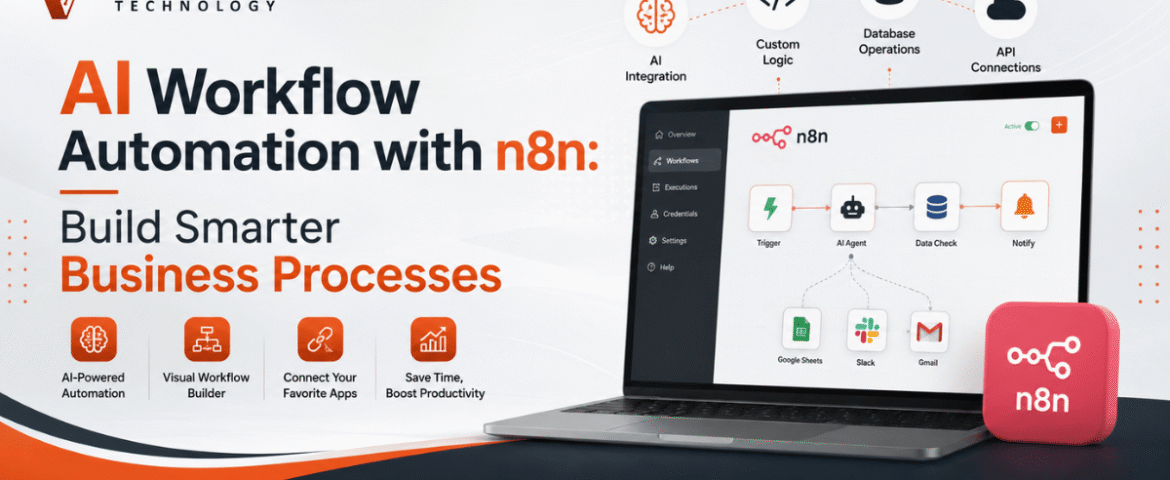
Artificial intelligence is transforming the way organizations manage everyday operations. Businesses no longer need to rely on repetitive manual work, disconnected systems, or time-consuming data handling. By combining AI with workflow automation, teams can automate complex tasks, improve productivity, reduce errors, and make faster decisions. AI workflow automation has become one of the most valuable technologies for businesses looking to scale efficiently. With n8n, organizations can connect hundreds of applications, integrate AI models, automate data processing, and build intelligent workflows without spending months on development. Whether you want to automate customer communication, content generation, lead management, reporting, or document processing, n8n provides a flexible and scalable platform for creating AI-powered workflows. What is AI Workflow Automation? AI workflow automation is the process of combining artificial intelligence with workflow automation tools to complete business tasks automatically. Unlike traditional automation, AI-powered workflows can analyze information, generate responses, classify data, summarize documents, and make intelligent decisions. Instead of simply moving data from one application to another, AI enables workflows to understand context and perform tasks that previously required human involvement. Common AI capabilities include: When integrated into n8n workflows, these capabilities become powerful business automation solutions. Why Choose n8n for AI Workflow Automation? n8n is an open-source workflow automation platform that allows users to visually build complex automations while maintaining complete flexibility. Some key advantages include: Visual Workflow Builder Build workflows using drag-and-drop nodes without creating complicated code. AI Integration Connect AI models directly into workflows for intelligent automation. Large Integration Library Connect hundreds of applications from CRM systems to cloud storage and communication platforms. Custom Logic Create advanced conditions, loops, filters, and decision-making paths. Self Hosting Option Maintain full control over your data with self-hosted deployments. API Friendly Integrate with virtually any platform using REST APIs and webhooks. How AI Workflow Automation Works in n8n A typical AI workflow consists of several connected steps. Step 1: Receive Input Data enters the workflow through: Step 2: Process Information n8n transforms and organizes incoming data before passing it to AI services. Step 3: AI Analysis The AI model performs tasks such as: Step 4: Decision Making The workflow decides what action to take based on AI output. Step 5: Automated Actions The workflow automatically: Benefits of AI Workflow Automation Businesses adopting AI automation experience improvements across multiple departments. Increased Productivity Employees spend less time on repetitive work and more time on strategic activities. Faster Response Times Automated workflows operate instantly without waiting for manual intervention. Better Accuracy AI reduces manual data entry mistakes and improves consistency. Lower Operational Costs Automation minimizes labor-intensive tasks and improves resource utilization. Improved Customer Experience Customers receive faster responses and more personalized interactions. Scalable Operations Workflows continue operating efficiently even as business volume increases. Popular AI Workflow Automation Use Cases AI Content Generation Automatically create: Content can then be reviewed before publication. AI Email Automation Incoming emails can be: This reduces inbox overload. Lead Qualification AI analyzes incoming leads based on: Qualified leads can automatically move into sales pipelines. Document Processing AI extracts information from: Extracted data is automatically stored in business systems. Customer Support Automation AI can: Support teams handle only complex issues. Data Synchronization Keep information updated across multiple platforms without manual copying. Whenever records change, every connected application stays synchronized. Meeting Notes Automation AI summarizes meeting transcripts and automatically creates: This saves hours every week. Essential Components of an AI Workflow A well-designed workflow usually contains several important elements. Trigger Starts the automation. Examples include: Data Processing Clean, organize, and transform information before AI processing. AI Model The intelligence layer performs: Decision Logic Conditional branches determine the next workflow path. Output Results may include: AI Workflow Automation for Marketing Marketing teams benefit significantly from AI automation. Examples include: Content Planning Generate weekly content ideas automatically. Campaign Reporting Collect marketing metrics into one dashboard. Audience Segmentation AI categorizes customers based on behavior. SEO Assistance Generate: Social Media Scheduling Automatically generate captions and prepare publishing workflows. AI Workflow Automation for Sales Sales departments can automate repetitive administrative work. Examples include: Lead Routing Assign leads to appropriate sales representatives. Proposal Generation Create customized proposals automatically. Sales Follow-Up Schedule follow-up emails based on customer behavior. CRM Updates Automatically update customer information. AI Workflow Automation for Human Resources HR teams can improve efficiency with AI. Examples include: Resume Screening AI evaluates resumes using predefined criteria. Interview Scheduling Automatically coordinate interview availability. Employee Onboarding Generate onboarding tasks for new employees. Policy Assistance Answer employee questions using AI knowledge. AI Workflow Automation for Finance Finance teams save time through intelligent automation. Examples include: Automation reduces processing delays and human error. AI Workflow Automation for Operations Operations departments often manage numerous repetitive tasks. AI workflows help automate: Best Practices for AI Workflow Automation Start Small Begin with one workflow before expanding automation. Keep Workflows Simple Avoid unnecessary complexity. Simple workflows are easier to maintain. Validate AI Output Review important AI-generated information before final use. Monitor Performance Track execution times and workflow success rates. Handle Errors Create fallback paths whenever external services fail. Secure Sensitive Data Protect confidential information through encryption and access controls. Common Challenges While AI workflow automation offers major benefits, some challenges should be considered. Poor Data Quality Incorrect input leads to poor AI results. Clean data improves workflow accuracy. Over Automation Not every business process should be automated. Human review remains valuable for critical decisions. API Limitations External services may impose request limits. Proper error handling is essential. Workflow Maintenance Regular updates keep automations reliable as connected applications evolve. Tips for Building Better AI Workflows in n8n Design Before Building Create a workflow diagram before implementation. Use Modular Workflows Break large workflows into reusable components. Test Frequently Validate each workflow section individually. Add Logging Track every important workflow step. Optimize Execution Reduce unnecessary processing to improve speed. Keep Documentation Document workflow logic for future maintenance. Future of AI Workflow Automation Artificial intelligence continues to evolve rapidly. Future workflows will become even more intelligent through: Organizations adopting AI workflow automation today
n8n vs Zapier vs Make: Which Automation Platform Should You Choose?
- By KHUSHI LIMBASIYA
- 0 Comments
- technology Latest News
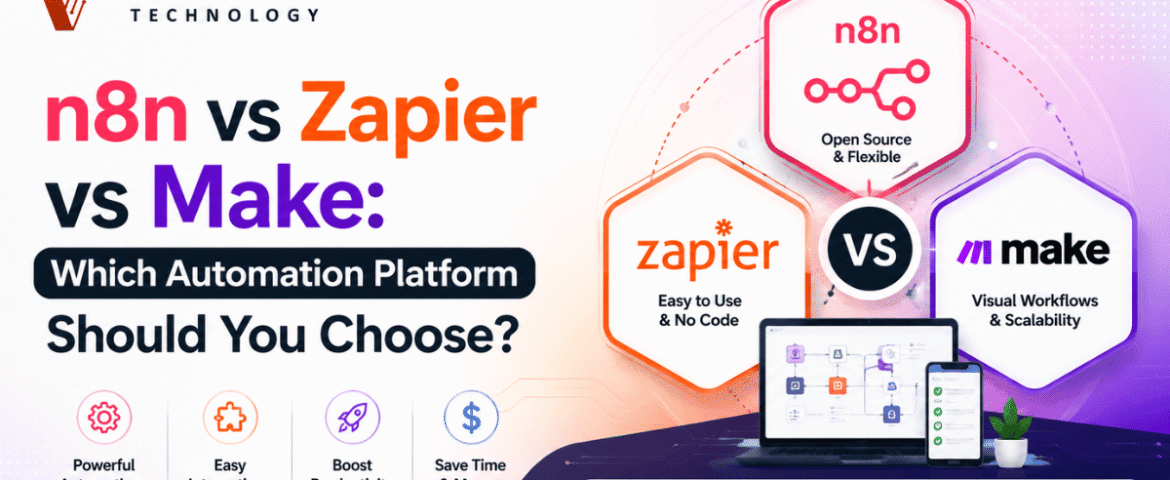
Automation has become an essential part of modern businesses. Whether you want to automate repetitive tasks, connect different applications, or create complex workflows, automation platforms make the process faster and more efficient. Three of the most popular workflow automation tools available today are n8n, Zapier, and Make. If you’re searching for the best automation platform, you’ve probably come across the debate of n8n vs Zapier. While all three platforms help automate workflows, they differ in pricing, flexibility, customization, ease of use, and scalability. In this guide, we’ll compare n8n vs Zapier vs Make in detail, covering features, advantages, disadvantages, pricing models, integrations, security, performance, and real-world use cases. By the end, you’ll know which platform is the best fit for your needs. What Is Workflow Automation? Workflow automation is the process of connecting different apps and services to perform tasks automatically without manual intervention. Instead of copying data from one application to another, automation platforms handle these repetitive processes instantly. Examples include: Automation saves time, reduces human errors, and improves productivity. Understanding n8n n8n is a workflow automation platform that provides complete flexibility. Unlike many automation tools, n8n allows users to self-host workflows while also offering cloud hosting. One of its biggest strengths is the ability to write JavaScript code inside workflows, making it ideal for developers and technical users. Key Features of n8n Understanding Zapier Zapier is one of the easiest workflow automation tools available. It focuses on simplicity, allowing users to create workflows without writing code. It supports thousands of app integrations and is popular among marketers, freelancers, startups, and small businesses. Key Features of Zapier Understanding Make Make provides a visual automation builder where workflows are designed using drag-and-drop modules. It offers greater flexibility than Zapier while remaining easier than fully coding workflows. Key Features of Make n8n vs Zapier: Main Differences The comparison between n8n vs Zapier often comes down to flexibility versus simplicity. Ease of Use Zapier is designed for beginners. n8n has a learning curve but offers much greater customization. Winner: Zapier Customization n8n allows developers to write JavaScript, build custom nodes, and create highly advanced workflows. Zapier mainly focuses on pre-built automation. Winner: n8n Hosting n8n supports both cloud hosting and self-hosting. Zapier only offers cloud hosting. Winner: n8n Pricing n8n becomes significantly more affordable for businesses running thousands of workflow executions. Zapier pricing increases as task usage grows. Winner: n8n Integrations Zapier supports a massive ecosystem of applications. n8n supports many integrations while allowing API connections for unsupported apps. Winner: Zapier Developer Experience Developers generally prefer n8n because of: Winner: n8n n8n vs Make Many users compare n8n vs Make because both offer advanced workflow builders. Visual Workflow Builder Make offers one of the best visual editors. n8n also provides visual workflows but focuses more on flexibility. Logic Handling Both support: APIs Both platforms have excellent API capabilities. Self Hosting Only n8n supports complete self-hosting. Advanced Development n8n is better suited for developers needing custom code execution. Zapier vs Make Zapier is ideal for simplicity. Make is better for users needing complex workflows without coding. Integration Support Automation platforms are only as good as the apps they connect. Popular integrations include: Productivity CRM Project Management Storage Marketing Databases AI Workflow Building Experience n8n Ideal for: Zapier Best for: Make Suitable for: Performance Comparison n8n Zapier Make Security n8n Zapier Make Pricing Comparison Pricing frequently changes, but the overall structure remains similar. n8n Zapier Make Pros and Cons n8n Pros n8n Cons Zapier Pros Zapier Cons Make Pros Make Cons Best Use Cases Choose n8n if you need Choose Zapier if you need Choose Make if you need Tips for Choosing the Right Automation Platform Consider Your Technical Skills Beginners often prefer Zapier because of its straightforward interface, while developers appreciate n8n for its advanced customization. Make sits comfortably in the middle, offering visual workflow design with more flexibility than typical no-code tools. Think About Workflow Complexity If your automation only connects a few applications, almost any platform will work well. For workflows involving multiple branches, APIs, databases, or custom scripts, n8n provides greater control. Evaluate Long-Term Costs As your business grows, automation volume usually increases. Compare pricing models carefully, especially if you expect thousands of workflow executions each month. Consider Hosting Requirements If data privacy and infrastructure control are priorities, self-hosting with n8n vs Zapier n8n may be the best option. Cloud-only users may find Zapier or Make more convenient. Common Automation Examples Here are a few practical workflows you can build using any of these platforms: Lead Management Content Publishing E-commerce Customer Support AI Automation Also Read : How n8n Workflow Automation Can Save Your Business Time And Money Conclusion Choosing between n8n vs Zapier vs Make depends on your goals, technical expertise, and workflow requirements. If flexibility, self-hosting, and advanced customization are your priorities, n8n vs Zapier is an excellent choice. It is particularly well-suited for developers, businesses managing large-scale automations, and teams building AI-powered workflows. If ease of use and quick setup matter most, n8n vs Zapier remains one of the best options. It enables users with little or no technical experience to automate everyday tasks quickly using its extensive integration library. If you want a balance between visual workflow design and advanced automation capabilities, Make offers an intuitive interface with powerful routing and data processing features. Ultimately, there is no single winner for every scenario. Understanding your automation needs, budget, technical skills, and expected workflow complexity will help you choose the platform that delivers the greatest long-term value. FAQs Q1. Is n8n better than Zapier? For advanced users and developers n8n vs Zapier , n8n offers greater flexibility, self-hosting, and customization. For beginners seeking simple automation, Zapier is generally easier to use. Q2. Which platform is best for beginners? Zapier is widely regarded as the most beginner-friendly due to its intuitive interface and large collection of ready-made workflow templates. Q3. Does n8n require coding? No. You can build many workflows without coding, but JavaScript support is available
How n8n Workflow Automation Can Save Your Business Time And Money
- By KHUSHI LIMBASIYA
- 0 Comments
- Latest News technology
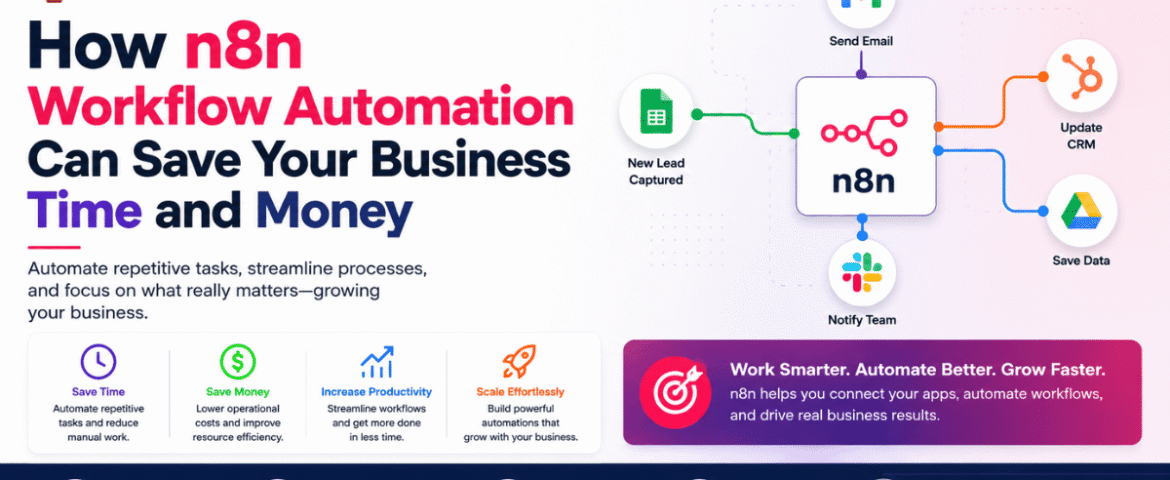
Businesses today handle hundreds of repetitive tasks every day. From collecting leads and sending emails to updating spreadsheets and notifying teams, these manual processes consume valuable time and increase the chances of human error. As organizations grow, managing these tasks manually becomes expensive and inefficient. This is where n8n workflow automation becomes a game changer. It allows businesses to automate repetitive workflows without requiring constant human intervention. Instead of switching between multiple applications and completing the same tasks repeatedly, businesses can create automated workflows that run 24/7. Whether you operate a startup, eCommerce store, marketing agency, educational platform, healthcare service, or manufacturing business, n8n workflow automation helps improve productivity, reduce costs, and streamline operations. This guide explains how n8n workflow automation saves businesses both time and money while increasing operational efficiency. What is n8n Workflow Automation? n8n workflow automation is a workflow automation platform that connects multiple applications, APIs, databases, and cloud services into one automated process. Instead of manually performing repetitive tasks, businesses create workflows consisting of connected nodes. Each node performs a specific action such as: Once activated, workflows execute automatically based on predefined conditions. The flexibility of n8n workflow automation makes it suitable for businesses of all sizes. Why Businesses Need Workflow Automation Manual work creates several operational challenges. Time-Consuming Repetitive Tasks Employees often spend hours performing routine work like: Automation eliminates these repetitive activities. Human Errors Manual data entry often causes: Automated workflows significantly reduce these mistakes. Slow Business Processes Without automation: Automation speeds up every process. Higher Operational Costs Hiring employees solely for repetitive work increases expenses. With n8n workflow automation, businesses automate repetitive operations and allow employees to focus on strategic work. How n8n Workflow Automation Saves Time Automates Repetitive Processes One of the biggest advantages is eliminating repetitive manual work. Examples include: Once configured, workflows run automatically. Instant Data Synchronization Businesses often use multiple software solutions. For example: Instead of manually copying data, n8n workflow automation synchronizes information automatically. Faster Lead Management Every second matters when responding to potential customers. Automation can instantly: This improves response time significantly. Automatic Report Generation Managers no longer need to compile reports manually. Automated workflows can: This saves hours every week. Real-Time Notifications Instead of constantly checking systems, automation sends alerts when: Employees receive updates immediately. How n8n Workflow Automation Saves Money Reduces Labor Costs Businesses spend thousands annually on repetitive administrative work. Automation handles many routine tasks without additional staffing. This reduces operational expenses while increasing productivity. Minimizes Human Errors Mistakes often lead to: Automated workflows perform tasks consistently and accurately. Improves Employee Productivity Instead of repetitive work, employees can focus on: This creates higher business value. Eliminates Unnecessary Software Costs Many businesses subscribe to multiple automation platforms. Because n8n workflow automation integrates numerous services into one workflow platform, organizations can simplify their automation stack and reduce software expenses. Prevents Revenue Loss Delayed responses often result in lost customers. Automation ensures: This increases conversion rates. Key Features of n8n Workflow Automation Visual Workflow Builder Users build workflows using an intuitive visual interface. No complicated coding is required for most automation tasks. API Integration Businesses can connect APIs to automate custom processes. This enables seamless communication between applications. Conditional Logic Workflows can make decisions automatically. Examples include: The workflow continues based on conditions. Scheduling Automation can run: This eliminates manual scheduling. Error Handling Workflows detect failures and automatically: This improves reliability. Business Areas That Benefit from n8n Workflow Automation Sales Automation helps sales teams by: Lead Assignment Automatically assign leads to the appropriate sales representative. Follow-Up Emails Schedule personalized follow-up messages. Sales Reports Generate daily and weekly reports automatically. Marketing Marketing teams save significant time through automation. Campaign Management Launch campaigns based on customer actions. Lead Nurturing Send automated email sequences. Analytics Collect marketing performance data automatically. Customer Support Automation improves customer satisfaction. Ticket Creation Create support tickets instantly. Notifications Alert support teams immediately. Customer Updates Send automatic status updates. Human Resources HR departments automate: Finance Automation simplifies financial operations. Examples include: Popular Workflow Ideas Website Contact Form Automation A visitor submits a form. Workflow actions: Order Processing When a customer places an order: Social Media Publishing Create one post. Automatically publish across multiple platforms. Employee Onboarding When a new employee joins: Customer Feedback Collection After purchase: Advantages of Using n8n Workflow Automation Flexible Customization Businesses create workflows tailored to their unique processes. Scalable Automation As the business grows, workflows can handle increasing workloads without major changes. Faster Decision Making Real-time information enables quicker business decisions. Improved Collaboration Departments remain synchronized through automated information sharing. Better Customer Experience Customers receive: Best Practices for Implementing n8n Workflow Automation Start with Repetitive Tasks Identify manual processes performed every day. Automate these first for the quickest return on investment. Keep Workflows Organized Use meaningful names and logical structures to simplify maintenance. Test Before Deployment Validate every workflow to ensure it performs correctly. Monitor Performance Review execution logs regularly to optimize workflows and detect issues. Expand Gradually Begin with simple automations, then add advanced workflows as your needs evolve. Common Mistakes to Avoid Automating Poor Processes Optimize inefficient processes before automating them. Ignoring Error Handling Always configure notifications and fallback actions for failed workflows. Overcomplicating Workflows Keep workflows modular and easy to understand. Skipping Documentation Document workflows so team members can maintain and improve them. Forgetting Security Protect credentials, APIs, and sensitive business data by following security best practices. Future of n8n Workflow Automation Automation continues to evolve with artificial intelligence, machine learning, predictive analytics, and intelligent decision-making. Businesses increasingly rely on connected systems to reduce manual effort, improve accuracy, and deliver faster customer experiences. As digital transformation accelerates, n8n workflow automation is becoming an essential tool for organizations that want to remain competitive. Companies that automate routine operations today are better positioned to scale efficiently, reduce operational costs, and adapt quickly to changing business demands. Also Read : What Is n8n? A Complete Beginner’s Guide To Workflow Automation Conclusion n8n workflow automation is more than just a productivity tool—it
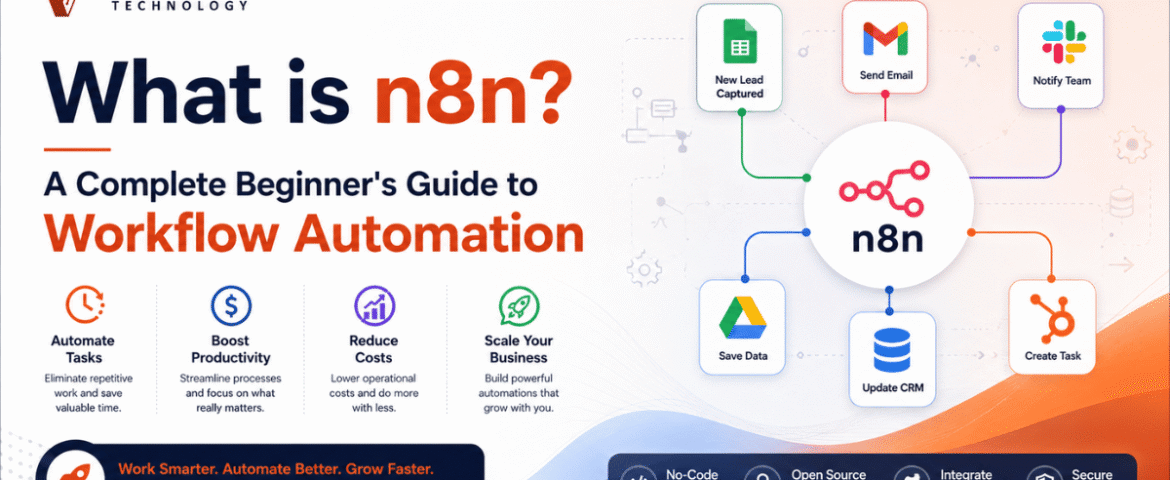
What Is n8n? A Complete Beginner’s Guide To Workflow Automation
- By KHUSHI LIMBASIYA
- 0 Comments
- Latest News technology
Businesses and individuals spend countless hours performing repetitive digital tasks every day. Copying data between applications, sending emails, updating spreadsheets, managing customer information, posting on social media, and organizing files are just a few examples of routine work that consumes valuable time. Workflow automation solves this problem by allowing software to perform repetitive tasks automatically. One of the fastest-growing workflow automation platforms is n8n. It enables users to connect multiple applications, automate processes, and build complex workflows with minimal manual effort. Whether you are a beginner exploring automation or a developer looking for advanced customization, n8n provides the flexibility to automate almost any digital process. Unlike many automation platforms that restrict customization, n8n offers a visual workflow builder combined with the ability to write custom code whenever needed. This makes it suitable for beginners who prefer drag-and-drop automation as well as professionals who require advanced logic. This beginner’s guide explains everything you need to know about n8n, including its features, benefits, use cases, workflow creation process, integrations, AI capabilities, and best practices. What is n8n? n8n is a workflow automation platform that connects different applications and services to automate repetitive tasks. Instead of manually transferring information between multiple systems, users can create workflows that execute automatically based on predefined conditions. A workflow consists of connected steps called nodes. Each node performs a specific task such as: The platform provides a visual interface where workflows are created by connecting these nodes together. One of n8n’s biggest strengths is its flexibility. Simple workflows can be built without coding, while advanced users can extend workflows using JavaScript, APIs, expressions, and custom logic. Why Workflow Automation Matters Modern businesses use dozens of digital tools every day. Managing them manually often results in: Time-consuming repetitive work Employees waste hours copying information between systems. Increased human errors Manual data entry increases the possibility of mistakes. Slow response times Customers expect instant communication and quick processing. Poor productivity Staff spend less time on meaningful work and more time on repetitive tasks. Workflow automation solves these challenges by creating reliable, repeatable, and scalable processes. How Does n8n Work? n8n works by connecting applications through workflows. A typical workflow follows these steps: Trigger The workflow starts when an event occurs. Examples include: Process Data After receiving information, n8n processes the data. This may include: Execute Actions The workflow performs one or more actions. Examples include: End Workflow The workflow finishes after completing all configured actions. Key Features of n8n Visual Workflow Builder The drag-and-drop interface allows users to build workflows without writing large amounts of code. Each node represents one action, making workflows easy to understand. Large Integration Library n8n supports hundreds of integrations with popular services including: It also supports any REST API. Custom Code Support Developers can use JavaScript to: This provides unlimited flexibility. Webhook Support Webhooks allow applications to instantly trigger workflows whenever an event occurs. This enables real-time automation. Scheduling Workflows can run: Perfect for reports, backups, and recurring tasks. Conditional Logic Users can create intelligent workflows using conditions. For example: Different actions can execute based on these conditions. Error Handling n8n includes features for: This improves workflow reliability. Benefits of Using n8n Saves Time Automation eliminates repetitive manual work. Reduces Errors Automated workflows execute consistently without typing mistakes. Improves Productivity Teams focus on important tasks instead of routine operations. Scalable Automation As workloads increase, workflows continue running automatically. Flexible Development Suitable for beginners and developers alike. Cost-Effective Users can automate complex business processes without expensive custom software. Common Use Cases Lead Management Automatically: Email Automation Automatically: Social Media Automation Schedule and publish content automatically. Examples include: Customer Support Automate: Data Synchronization Keep multiple applications synchronized. For example: File Management Automatically: AI Automation Integrate AI services to: Understanding Nodes in n8n Nodes are the building blocks of every workflow. Trigger Nodes Start workflows. Examples: Action Nodes Perform tasks. Examples: Logic Nodes Control workflow behavior. Examples: Data Nodes Transform information. Examples: Creating Your First Workflow Step 1 Create a new workflow. Step 2 Add a trigger. Example: Manual Trigger Step 3 Connect another node. Example: Google Sheets Step 4 Configure credentials. Step 5 Choose the desired action. Step 6 Test the workflow. Step 7 Activate the workflow. Once activated, it will run automatically whenever the trigger occurs. Popular n8n Integrations Some commonly used integrations include: Productivity Communication Databases Marketing Development Cloud Storage AI and n8n Artificial Intelligence has become an important part of workflow automation. n8n allows users to combine AI with automation to create intelligent workflows. Examples include: AI Content Generation Generate: AI Chatbots Create automated conversations with customers. Document Processing Automatically: Customer Sentiment Analysis Analyze customer messages and classify them as: Data Classification Automatically organize large datasets using AI. Best Practices for Beginners Start Small Build simple workflows before creating advanced automations. Name Every Node Clear names make workflows easier to understand. Test Frequently Run workflows step by step before activating them. Handle Errors Always create fallback paths for failed executions. Use Variables Avoid hardcoding values whenever possible. Organize Workflows Group related workflows into logical folders or projects. Monitor Executions Regularly review execution history to identify issues. Common Beginner Mistakes Overcomplicating Workflows Keep workflows simple. Ignoring Error Handling Always prepare for unexpected failures. Not Testing Test every workflow before deploying it. Poor Documentation Document workflow logic for future maintenance. Forgetting Security Protect credentials and sensitive data. Future of Workflow Automation Workflow automation continues to evolve rapidly with artificial intelligence, machine learning, and cloud computing. Future automation trends include: As organizations continue adopting digital transformation, workflow automation platforms like n8n will become increasingly important for improving efficiency and reducing manual work. Also Read : WhatsApp Chat Automation: The Complete Guide to Smarter Customer Communication Conclusion n8n is a powerful and flexible workflow automation platform that helps automate repetitive digital tasks across multiple applications. Its visual workflow builder, extensive integrations, custom code support, AI capabilities, and scalable architecture make it suitable for beginners and experienced users alike. Whether you want to automate emails, synchronize databases,