
- Mail Address info@velnustech.com
- Phone Number +91-90990-05498

Contact Info
- C-1024, Siddhivinayak Tower, Kataria Automobile Road Makarba, Ahmedabad - 380051
- +91 90990 05498
- info@velnustech.com
- Week Days: 09.00 to 18.00 Sunday: Closed
AI workflow automation
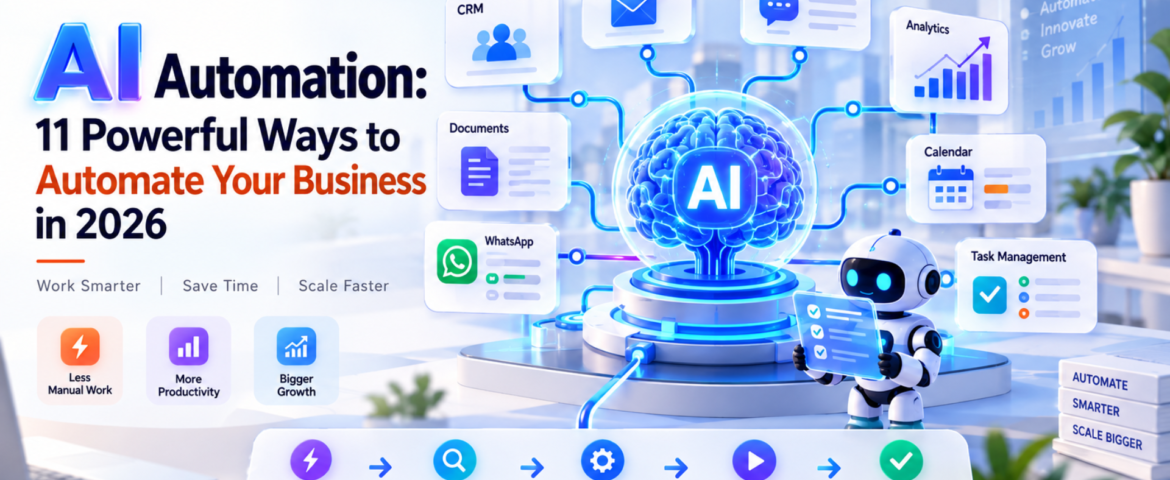
AI Automation: 11 Powerful Ways to Automate Your Business in 2026
- By pmayank658@gmail.com
- 0 Comments
- Latest News technology
AI Automation: 11 Powerful Ways to Automate Your Business in 2026 AI Automation means using artificial intelligence to understand information, make decisions, and complete repetitive business tasks with little or no manual effort. For beginners, freelancers, and small business owners, it can automate everything from lead follow-ups and customer support to reporting, scheduling, and data entry. The important point is this: AI automation is not about replacing every person with AI. It is about removing repetitive work so people can focus on work that actually needs human judgment. In 2026, businesses are moving beyond simple chatbots toward AI-powered workflows and agents that can perform multiple steps inside a business process. Google Cloud’s 2026 AI Agent Trends report, for example, identifies agentic workflows as an important direction for business automation. In simple words: AI automation lets you tell a system what needs to happen, and the system handles much of the work for you. Table of Contents What Is AI Automation? AI automation is the use of artificial intelligence within automated workflows to understand inputs, make decisions, generate outputs, and perform actions. Traditional automation usually follows fixed rules. For example: If a customer fills out a form → send an email. AI automation can handle a more flexible situation: A customer submits an enquiry → AI understands the enquiry → identifies the customer’s requirement → checks relevant information → creates or updates a CRM record → sends a personalized response → alerts a salesperson when human attention is needed. That’s the major difference. Traditional automation mostly follows predefined instructions. AI automation can interpret information and handle situations that aren’t always perfectly predictable. What is a simple example of AI automation? Imagine a small web-design agency receiving 30 enquiries every day. Without automation, someone might need to: With AI automation, much of this workflow can happen automatically. The AI can understand the enquiry, categorize it, update the CRM, draft a personalized response, and trigger a follow-up sequence. The human still controls important decisions. How Does AI Automation Work? A typical AI automation workflow has five basic stages: Trigger → Understand → Decide → Act → Verify 1. Trigger Something starts the workflow. Examples: 2. Understand AI processes the information. For example, it can identify: 3. Decide The system determines what should happen next. For example: “This customer wants a product demo, so create a qualified sales lead.” 4. Act The automation performs an action. It could: 5. Verify A good AI automation system shouldn’t blindly trust every AI output. For sensitive actions, it can ask a person for approval. This human-in-the-loop approach is especially useful for financial, legal, customer-facing, or high-risk workflows. What Are the Best AI Automation Use Cases? AI automation can be applied to almost any repetitive workflow. But small businesses should start with tasks that happen frequently and follow a reasonably clear process. Here are 11 practical examples. 1. Lead Generation and Qualification AI can read incoming enquiries and identify potential customers based on criteria such as: Instead of manually checking every lead, the sales team can focus on qualified prospects. 2. Customer Support AI automation can answer common questions, classify support requests, find relevant information, and escalate complicated cases to a human. For example: Customer question → AI understands request → searches knowledge base → responds → escalates if necessary This doesn’t mean every customer interaction should be handled by AI. Complex or sensitive issues should still have a human escalation path. 3. Email Automation AI can classify incoming emails and decide what should happen next. For example: Sales enquiry → CRMInvoice email → Finance folderSupport issue → Help deskMeeting request → Calendar workflow This can save small teams a surprising amount of administrative time. 4. CRM Updates CRM data often becomes outdated because employees don’t have time to update it. AI automation can extract information from emails, calls, forms, or messages and use it to update customer records. This makes the CRM more useful without forcing employees to enter every detail manually. 5. Appointment Scheduling Instead of exchanging multiple messages to find a suitable time, automation can: This is particularly useful for consultants, agencies, clinics, coaches, and service businesses. 6. Content Creation AI automation can support a content workflow: Topic → Research → Brief → Draft → Review → Publish But there’s an important difference between automating content production and publishing everything generated by AI. Human review is still valuable for: Google’s current guidance emphasizes useful, original content rather than simply producing more AI-generated pages. 7. Social Media Workflows AI can help transform one piece of content into multiple formats. For example: Blog article → LinkedIn post → Instagram caption → short video script → email newsletter A person can then review and approve the content before publishing. 8. Invoicing and Administrative Work AI automation can extract information from invoices, organize documents, identify missing information, and trigger reminders. For example: Invoice received → extract vendor + amount + date → categorize → send for approval → update accounting workflow. Financial actions should generally have appropriate approval and security controls. 9. Weekly Business Reports Instead of manually collecting data from multiple systems, an automation can gather information and prepare a summary. For example: CRM + website analytics + sales data → AI analysis → weekly business report The owner can then spend time interpreting the results rather than assembling spreadsheets. 10. WhatsApp Customer Communication For businesses that receive many customer enquiries through WhatsApp, AI automation can help with: The key is to connect the automation to accurate business information rather than allowing the AI to invent answers. 11. Internal Task Management AI can turn conversations and messages into actionable tasks. For example: “Please prepare the proposal for ABC before Friday.” An automation could identify the task, assign it to the correct person, set a deadline, and add it to a project-management system. How Can Small Businesses Use AI Automation? Small businesses don’t need to automate everything. In fact, trying to automate the entire business at once is
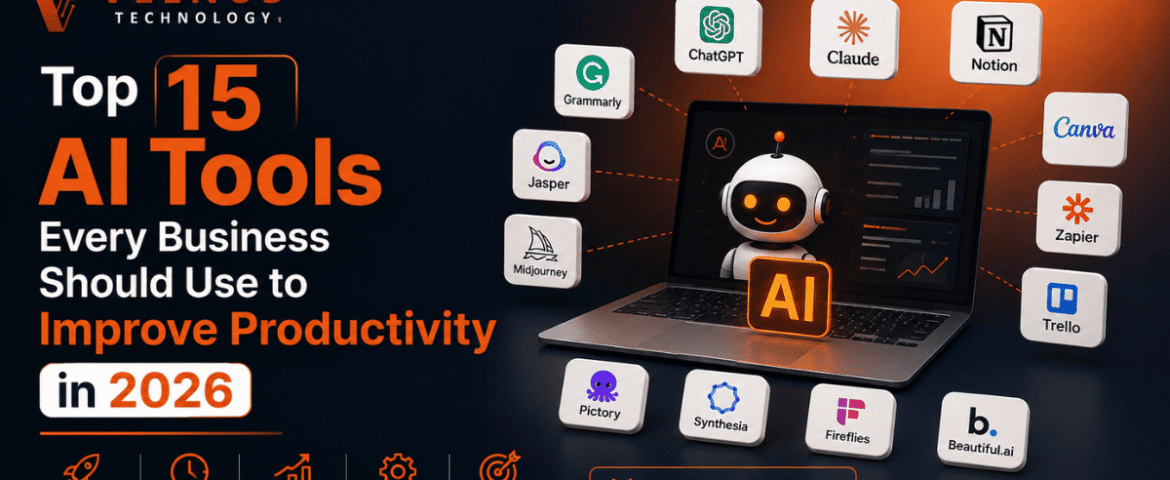
Top 15 AI Tools Every Business Should Use to Improve Productivity in 2026
- By KHUSHI LIMBASIYA
- 0 Comments
- technology Latest News
Modern organizational workflows have moved far beyond manual operations, static spreadsheets, and repetitive routine tasks. To stay competitive in today’s fast-moving digital economy, integrating advanced AI Tools into your daily business stack is no longer an option—it is a core necessity. From intelligent content generation and complex data analysis to automated project management and predictive customer service, artificial intelligence is actively restructuring how work gets done. This comprehensive guide breaks down the top 15 AI Tools that every modern business should deploy in 2026 to streamline operations, eliminate administrative bottlenecks, and maximize overall output. The Transformation of Business Operations Through AI The integration of artificial intelligence across corporate departments has transitioned from basic task automation to full-scale autonomous execution. Modern enterprises are adopting specialized software engines capable of processing vast amounts of unstructured data, recognizing subtle operational patterns, and executing complex, multi-step decisions in real-time. When deployed effectively, business-grade AI Tools serve as specialized digital force multipliers. They allow human teams to shed repetitive administrative tasks—such as manual data entry, routine scheduling, and basic customer inquiries—and direct their efforts toward strategic planning, high-level creative execution, and core business expansion. 1. ChatGPT Enterprise Next-Generation Conversational Intelligence & Reasoning ChatGPT Enterprise remains a foundational tool for organizational operations. Powered by advanced frontier models, this platform acts as a versatile internal assistant capable of analyzing massive datasets, drafting technical documentation, writing code, and answering complex business queries. Key Productivity Benefits 2. Microsoft 365 Copilot Native Suite Productivity Acceleration Microsoft 365 Copilot integrates artificial intelligence directly into standard workplace applications like Word, Excel, PowerPoint, Outlook, and Teams. It serves as an embedded digital assistant that understands full organizational context across your entire operational ecosystem. Key Productivity Benefits 3. Google Gemini Multimodal Workspace Integration Google Gemini offers deep integration across cloud storage, email, document processing, and spreadsheet applications. Its primary strength lies in its native multimodal processing, allowing it to interpret and synthesize text, high-resolution visuals, code, and audio seamlessly within a single workspace. Key Productivity Benefits 4. Claude Long-Document Processing and High-Reasoning Tasks Developed with a strict focus on precision, safety, and deep contextual understanding, Claude excels at processing massive volumes of complex text. It is widely adopted by legal, compliance, and research departments that require rigorous document analysis and nuanced logical reasoning. Key Productivity Benefits 5. Zapier AI Orchestration and Workflow Automation Zapier serves as the central neural network for modern tech stacks. By connecting thousands of distinct software applications, its AI-powered features allow non-technical teams to construct intricate, multi-step automated workflows using standard conversational language. Key Productivity Benefits 6. Notion AI Centralized Knowledge Management and Documentation Notion AI turns static company workspaces into dynamic knowledge repositories. It provides built-in writing, editing, summarization, and search capabilities across all internal project notes, meeting transcripts, and corporate wikis. Key Productivity Benefits 7. Motion Automated Task and Calendar Scheduling Motion acts as an intelligent executive assistant that manages time allocation for entire organizations. Using predictive algorithms, it builds custom daily schedules for team members, constantly rearranging priorities as new urgent tasks emerge. Key Productivity Benefits 8. GitHub Copilot Developer Productivity and Pair Programming For software engineering departments, GitHub Copilot acts as an AI pair programmer. Operating directly within developer coding environments, it provides real-time code completion, suggests optimizations, and writes unit tests automatically. Key Productivity Benefits 9. Perplexity Real-Time Market Research and Information Retrieval Perplexity functions as an advanced, citation-backed intelligence engine designed specifically for fast business research. Instead of requiring researchers to open dozens of search tabs, it scans the web in real-time, synthesizes verified answers, and cites every source explicitly. Key Productivity Benefits 10. Jasper Enterprise Marketing and Brand Copy Generation Jasper is an AI writing engine tailored specifically for enterprise marketing teams, brand managers, and creative agencies. It generates on-brand promotional material across multiple channels while strict adherence to brand voice guides. Key Productivity Benefits 11. Midjourney Visual Asset Conceptualization and Creative Ideation Midjourney is a premier generative image platform recognized for producing high-fidelity visual assets, photorealistic concept art, and innovative marketing graphics. Key Productivity Benefits 12. Fireflies Conversation Intelligence and Meeting Transcription Fireflies operates as an autonomous meeting assistant that joins digital video conferences, records discussions, generates transcriptions, and extracts key action items automatically. Key Productivity Benefits 13. Grammarly Real-Time Communication and Style Optimization Grammarly goes far beyond simple spell-checking, serving as an enterprise-wide communication assistant. It monitors written output across web browsers, email clients, and desktop applications to ensure clarity, proper tone, and brand compliance. Key Productivity Benefits 14. Synthesia AI Video Generation and Multilingual Localization Synthesia allows businesses to create professional video content using photorealistic avatars and synthetic speech, entirely eliminating the need for traditional camera setups, actors, or studio equipment. Key Productivity Benefits 15. Glean Enterprise Search and Grounded Context Layer Glean acts as an intelligent search engine that indexing data across all your disparate corporate tools, including cloud drives, messaging applications, ticketing systems, and databases. It provides a secure context layer so employees can find accurate answers without switching platforms. Key Productivity Benefits Strategic Framework for Evaluating AI Tools Selecting the right software requires a clear framework to avoid tool bloat and integration bottlenecks. Organizations should evaluate new software solutions using four essential criteria: Key Selection Criteria Also Read : How AI Chatbots Are Transforming Customer Support And Engagement Conclusion The corporate landscape in 2026 demands operational speed, contextual clarity, and administrative efficiency. Deploying the right suite of AI Tools allows modern businesses to automate repetitive tasks, extract actionable insights from unstructured data, and streamline cross-departmental workflows. By adopting enterprise-grade intelligence platforms—spanning conversational reasoning, automated project scheduling, intelligent software development, and centralized organizational search—businesses can eliminate operational bottlenecks and build a resilient, future-ready workforce. The key to sustainable growth lies in building a cohesive, connected software ecosystem that amplifies human capability at every level. Frequently Asked Questions (FAQs) Q1 What are AI Tools and how do they benefit modern businesses? AI Tools are software applications that leverage machine learning algorithms, natural language processing, and advanced neural models
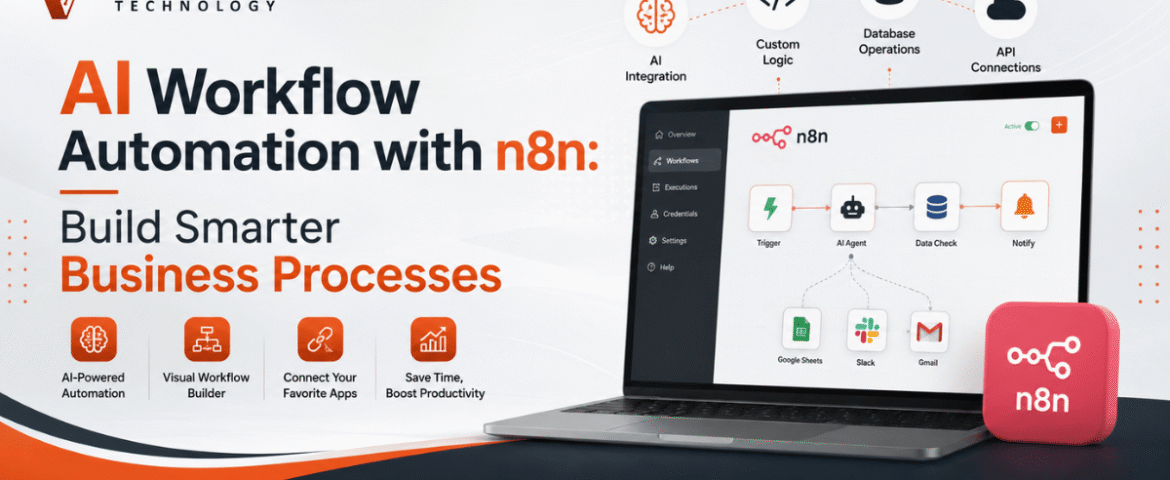
AI Workflow Automation with n8n: Build Smarter Business Processes
- By KHUSHI LIMBASIYA
- 0 Comments
- technology Latest News
Artificial intelligence is transforming the way organizations manage everyday operations. Businesses no longer need to rely on repetitive manual work, disconnected systems, or time-consuming data handling. By combining AI with workflow automation, teams can automate complex tasks, improve productivity, reduce errors, and make faster decisions. AI workflow automation has become one of the most valuable technologies for businesses looking to scale efficiently. With n8n, organizations can connect hundreds of applications, integrate AI models, automate data processing, and build intelligent workflows without spending months on development. Whether you want to automate customer communication, content generation, lead management, reporting, or document processing, n8n provides a flexible and scalable platform for creating AI-powered workflows. What is AI Workflow Automation? AI workflow automation is the process of combining artificial intelligence with workflow automation tools to complete business tasks automatically. Unlike traditional automation, AI-powered workflows can analyze information, generate responses, classify data, summarize documents, and make intelligent decisions. Instead of simply moving data from one application to another, AI enables workflows to understand context and perform tasks that previously required human involvement. Common AI capabilities include: When integrated into n8n workflows, these capabilities become powerful business automation solutions. Why Choose n8n for AI Workflow Automation? n8n is an open-source workflow automation platform that allows users to visually build complex automations while maintaining complete flexibility. Some key advantages include: Visual Workflow Builder Build workflows using drag-and-drop nodes without creating complicated code. AI Integration Connect AI models directly into workflows for intelligent automation. Large Integration Library Connect hundreds of applications from CRM systems to cloud storage and communication platforms. Custom Logic Create advanced conditions, loops, filters, and decision-making paths. Self Hosting Option Maintain full control over your data with self-hosted deployments. API Friendly Integrate with virtually any platform using REST APIs and webhooks. How AI Workflow Automation Works in n8n A typical AI workflow consists of several connected steps. Step 1: Receive Input Data enters the workflow through: Step 2: Process Information n8n transforms and organizes incoming data before passing it to AI services. Step 3: AI Analysis The AI model performs tasks such as: Step 4: Decision Making The workflow decides what action to take based on AI output. Step 5: Automated Actions The workflow automatically: Benefits of AI Workflow Automation Businesses adopting AI automation experience improvements across multiple departments. Increased Productivity Employees spend less time on repetitive work and more time on strategic activities. Faster Response Times Automated workflows operate instantly without waiting for manual intervention. Better Accuracy AI reduces manual data entry mistakes and improves consistency. Lower Operational Costs Automation minimizes labor-intensive tasks and improves resource utilization. Improved Customer Experience Customers receive faster responses and more personalized interactions. Scalable Operations Workflows continue operating efficiently even as business volume increases. Popular AI Workflow Automation Use Cases AI Content Generation Automatically create: Content can then be reviewed before publication. AI Email Automation Incoming emails can be: This reduces inbox overload. Lead Qualification AI analyzes incoming leads based on: Qualified leads can automatically move into sales pipelines. Document Processing AI extracts information from: Extracted data is automatically stored in business systems. Customer Support Automation AI can: Support teams handle only complex issues. Data Synchronization Keep information updated across multiple platforms without manual copying. Whenever records change, every connected application stays synchronized. Meeting Notes Automation AI summarizes meeting transcripts and automatically creates: This saves hours every week. Essential Components of an AI Workflow A well-designed workflow usually contains several important elements. Trigger Starts the automation. Examples include: Data Processing Clean, organize, and transform information before AI processing. AI Model The intelligence layer performs: Decision Logic Conditional branches determine the next workflow path. Output Results may include: AI Workflow Automation for Marketing Marketing teams benefit significantly from AI automation. Examples include: Content Planning Generate weekly content ideas automatically. Campaign Reporting Collect marketing metrics into one dashboard. Audience Segmentation AI categorizes customers based on behavior. SEO Assistance Generate: Social Media Scheduling Automatically generate captions and prepare publishing workflows. AI Workflow Automation for Sales Sales departments can automate repetitive administrative work. Examples include: Lead Routing Assign leads to appropriate sales representatives. Proposal Generation Create customized proposals automatically. Sales Follow-Up Schedule follow-up emails based on customer behavior. CRM Updates Automatically update customer information. AI Workflow Automation for Human Resources HR teams can improve efficiency with AI. Examples include: Resume Screening AI evaluates resumes using predefined criteria. Interview Scheduling Automatically coordinate interview availability. Employee Onboarding Generate onboarding tasks for new employees. Policy Assistance Answer employee questions using AI knowledge. AI Workflow Automation for Finance Finance teams save time through intelligent automation. Examples include: Automation reduces processing delays and human error. AI Workflow Automation for Operations Operations departments often manage numerous repetitive tasks. AI workflows help automate: Best Practices for AI Workflow Automation Start Small Begin with one workflow before expanding automation. Keep Workflows Simple Avoid unnecessary complexity. Simple workflows are easier to maintain. Validate AI Output Review important AI-generated information before final use. Monitor Performance Track execution times and workflow success rates. Handle Errors Create fallback paths whenever external services fail. Secure Sensitive Data Protect confidential information through encryption and access controls. Common Challenges While AI workflow automation offers major benefits, some challenges should be considered. Poor Data Quality Incorrect input leads to poor AI results. Clean data improves workflow accuracy. Over Automation Not every business process should be automated. Human review remains valuable for critical decisions. API Limitations External services may impose request limits. Proper error handling is essential. Workflow Maintenance Regular updates keep automations reliable as connected applications evolve. Tips for Building Better AI Workflows in n8n Design Before Building Create a workflow diagram before implementation. Use Modular Workflows Break large workflows into reusable components. Test Frequently Validate each workflow section individually. Add Logging Track every important workflow step. Optimize Execution Reduce unnecessary processing to improve speed. Keep Documentation Document workflow logic for future maintenance. Future of AI Workflow Automation Artificial intelligence continues to evolve rapidly. Future workflows will become even more intelligent through: Organizations adopting AI workflow automation today
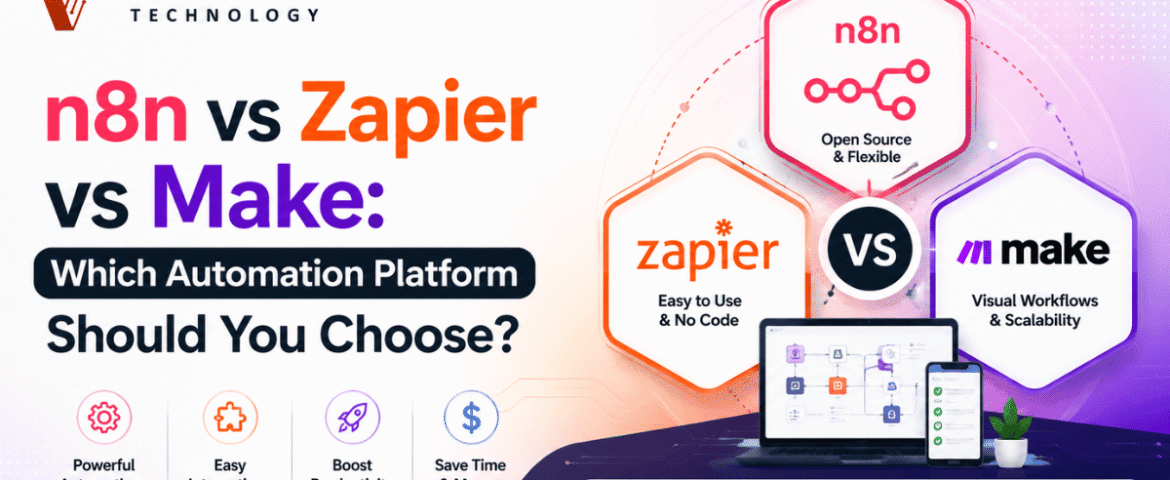
n8n vs Zapier vs Make: Which Automation Platform Should You Choose?
- By KHUSHI LIMBASIYA
- 0 Comments
- technology Latest News
Automation has become an essential part of modern businesses. Whether you want to automate repetitive tasks, connect different applications, or create complex workflows, automation platforms make the process faster and more efficient. Three of the most popular workflow automation tools available today are n8n, Zapier, and Make. If you’re searching for the best automation platform, you’ve probably come across the debate of n8n vs Zapier. While all three platforms help automate workflows, they differ in pricing, flexibility, customization, ease of use, and scalability. In this guide, we’ll compare n8n vs Zapier vs Make in detail, covering features, advantages, disadvantages, pricing models, integrations, security, performance, and real-world use cases. By the end, you’ll know which platform is the best fit for your needs. What Is Workflow Automation? Workflow automation is the process of connecting different apps and services to perform tasks automatically without manual intervention. Instead of copying data from one application to another, automation platforms handle these repetitive processes instantly. Examples include: Automation saves time, reduces human errors, and improves productivity. Understanding n8n n8n is a workflow automation platform that provides complete flexibility. Unlike many automation tools, n8n allows users to self-host workflows while also offering cloud hosting. One of its biggest strengths is the ability to write JavaScript code inside workflows, making it ideal for developers and technical users. Key Features of n8n Understanding Zapier Zapier is one of the easiest workflow automation tools available. It focuses on simplicity, allowing users to create workflows without writing code. It supports thousands of app integrations and is popular among marketers, freelancers, startups, and small businesses. Key Features of Zapier Understanding Make Make provides a visual automation builder where workflows are designed using drag-and-drop modules. It offers greater flexibility than Zapier while remaining easier than fully coding workflows. Key Features of Make n8n vs Zapier: Main Differences The comparison between n8n vs Zapier often comes down to flexibility versus simplicity. Ease of Use Zapier is designed for beginners. n8n has a learning curve but offers much greater customization. Winner: Zapier Customization n8n allows developers to write JavaScript, build custom nodes, and create highly advanced workflows. Zapier mainly focuses on pre-built automation. Winner: n8n Hosting n8n supports both cloud hosting and self-hosting. Zapier only offers cloud hosting. Winner: n8n Pricing n8n becomes significantly more affordable for businesses running thousands of workflow executions. Zapier pricing increases as task usage grows. Winner: n8n Integrations Zapier supports a massive ecosystem of applications. n8n supports many integrations while allowing API connections for unsupported apps. Winner: Zapier Developer Experience Developers generally prefer n8n because of: Winner: n8n n8n vs Make Many users compare n8n vs Make because both offer advanced workflow builders. Visual Workflow Builder Make offers one of the best visual editors. n8n also provides visual workflows but focuses more on flexibility. Logic Handling Both support: APIs Both platforms have excellent API capabilities. Self Hosting Only n8n supports complete self-hosting. Advanced Development n8n is better suited for developers needing custom code execution. Zapier vs Make Zapier is ideal for simplicity. Make is better for users needing complex workflows without coding. Integration Support Automation platforms are only as good as the apps they connect. Popular integrations include: Productivity CRM Project Management Storage Marketing Databases AI Workflow Building Experience n8n Ideal for: Zapier Best for: Make Suitable for: Performance Comparison n8n Zapier Make Security n8n Zapier Make Pricing Comparison Pricing frequently changes, but the overall structure remains similar. n8n Zapier Make Pros and Cons n8n Pros n8n Cons Zapier Pros Zapier Cons Make Pros Make Cons Best Use Cases Choose n8n if you need Choose Zapier if you need Choose Make if you need Tips for Choosing the Right Automation Platform Consider Your Technical Skills Beginners often prefer Zapier because of its straightforward interface, while developers appreciate n8n for its advanced customization. Make sits comfortably in the middle, offering visual workflow design with more flexibility than typical no-code tools. Think About Workflow Complexity If your automation only connects a few applications, almost any platform will work well. For workflows involving multiple branches, APIs, databases, or custom scripts, n8n provides greater control. Evaluate Long-Term Costs As your business grows, automation volume usually increases. Compare pricing models carefully, especially if you expect thousands of workflow executions each month. Consider Hosting Requirements If data privacy and infrastructure control are priorities, self-hosting with n8n vs Zapier n8n may be the best option. Cloud-only users may find Zapier or Make more convenient. Common Automation Examples Here are a few practical workflows you can build using any of these platforms: Lead Management Content Publishing E-commerce Customer Support AI Automation Also Read : How n8n Workflow Automation Can Save Your Business Time And Money Conclusion Choosing between n8n vs Zapier vs Make depends on your goals, technical expertise, and workflow requirements. If flexibility, self-hosting, and advanced customization are your priorities, n8n vs Zapier is an excellent choice. It is particularly well-suited for developers, businesses managing large-scale automations, and teams building AI-powered workflows. If ease of use and quick setup matter most, n8n vs Zapier remains one of the best options. It enables users with little or no technical experience to automate everyday tasks quickly using its extensive integration library. If you want a balance between visual workflow design and advanced automation capabilities, Make offers an intuitive interface with powerful routing and data processing features. Ultimately, there is no single winner for every scenario. Understanding your automation needs, budget, technical skills, and expected workflow complexity will help you choose the platform that delivers the greatest long-term value. FAQs Q1. Is n8n better than Zapier? For advanced users and developers n8n vs Zapier , n8n offers greater flexibility, self-hosting, and customization. For beginners seeking simple automation, Zapier is generally easier to use. Q2. Which platform is best for beginners? Zapier is widely regarded as the most beginner-friendly due to its intuitive interface and large collection of ready-made workflow templates. Q3. Does n8n require coding? No. You can build many workflows without coding, but JavaScript support is available