
- Mail Address info@velnustech.com
- Phone Number +91-90990-05498

Contact Info
- C-1024, Siddhivinayak Tower, Kataria Automobile Road Makarba, Ahmedabad - 380051
- +91 90990 05498
- info@velnustech.com
- Week Days: 09.00 to 18.00 Sunday: Closed
Marketing Automation
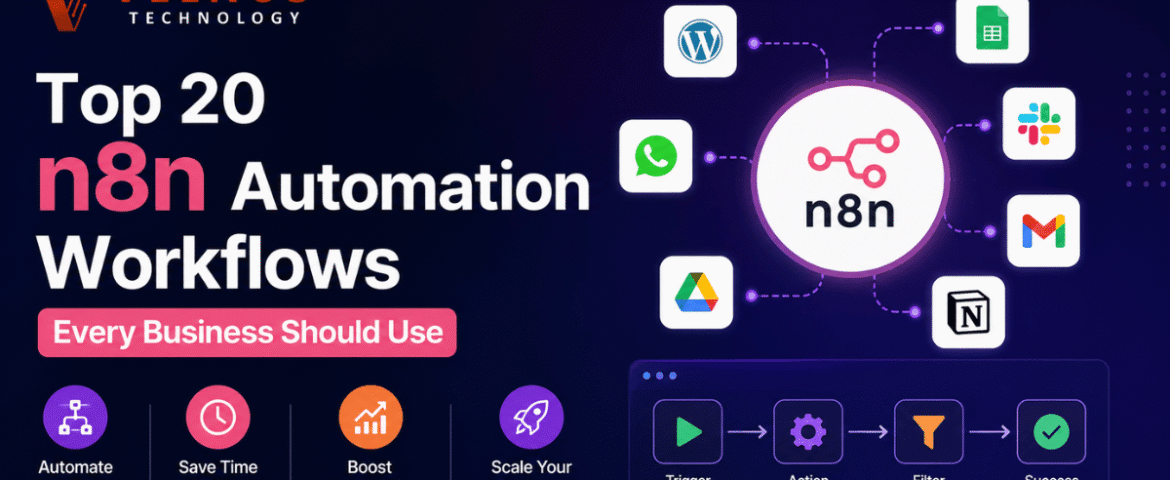
Top 20 n8n Automation Workflows Every Business Should Use
- By KHUSHI LIMBASIYA
- 0 Comments
- technology Latest News
Introduction Businesses today are constantly looking for ways to reduce manual work, improve efficiency, and increase productivity. One of the most effective solutions is n8n Automation, an open-source workflow automation platform that connects apps, APIs, and services without requiring extensive coding knowledge. Whether you’re managing customer inquiries, marketing campaigns, sales pipelines, or internal operations, automation can eliminate repetitive tasks and help teams focus on strategic work. With thousands of integrations and powerful workflow capabilities, n8n allows businesses to automate processes across departments. From lead management to reporting and customer communication, businesses of all sizes can save countless hours every week. In this article, we’ll explore the Top 20 n8n Automation Workflows Every Business Should Use to improve productivity, streamline operations, and accelerate growth. Why Businesses Choose n8n Automation Flexible Workflow Design n8n provides a visual workflow builder that makes it easy to connect multiple applications and automate complex business processes. Saves Time Manual repetitive work is replaced with automated workflows, allowing employees to focus on more valuable tasks. Improves Accuracy Automation reduces human errors by following predefined rules and conditions consistently. Easy Integration n8n connects with hundreds of popular platforms, APIs, databases, and cloud services. Scalable Solution Whether you’re a startup or a large organization, workflows can easily grow alongside your business. Top 20 n8n Automation Workflows Every Business Should Use 1. Automatic Lead Collection Capture leads from websites, landing pages, and online forms, then automatically organize them into your CRM or database. Benefits 2. Email Notification Workflow Automatically send confirmation emails whenever a new inquiry, registration, or request is received. Benefits 3. Contact Synchronization Keep customer information synchronized between multiple applications automatically. Benefits 4. Task Creation Automation Create tasks automatically whenever a new project, request, or inquiry is received. Benefits 5. Social Media Scheduling Publish content automatically according to a predefined schedule across multiple platforms. Benefits 6. Customer Support Ticket Workflow Automatically organize incoming support requests based on categories, urgency, or keywords. Benefits 7. Invoice Generation Workflow Generate invoices automatically after orders or completed services. Benefits 8. Sales Pipeline Automation Automatically move opportunities through different sales stages based on customer activities. Benefits 9. Data Backup Workflow Schedule automatic backups of important business data. Benefits 10. File Organization Workflow Automatically move, rename, and organize uploaded files into structured folders. Benefits 11. Appointment Reminder Workflow Automatically send reminders before scheduled meetings or appointments. Benefits 12. Marketing Campaign Automation Trigger marketing actions based on customer behavior or predefined conditions. Benefits 13. Report Generation Workflow Generate daily, weekly, or monthly reports automatically. Benefits 14. Internal Team Notifications Notify team members instantly whenever important events occur. Benefits 15. Inventory Monitoring Workflow Track inventory changes automatically and receive alerts when stock reaches a predefined level. Benefits 16. Order Processing Automation Automatically process incoming orders and update workflow statuses. Benefits 17. Document Approval Workflow Route documents automatically for approvals based on predefined conditions. Benefits 18. Feedback Collection Workflow Collect customer feedback automatically after product delivery or service completion. Benefits 19. Event Registration Automation Automatically organize event registrations and send confirmations. Benefits 20. Business Dashboard Workflow Automatically collect business metrics from multiple systems into a centralized dashboard. Benefits Best Practices for n8n Automation Start with Small Workflows Begin with simple automations before building larger, more complex workflows. Test Before Deployment Always test workflows thoroughly to ensure accurate execution. Use Error Handling Implement error notifications and retry mechanisms for reliable automation. Secure Sensitive Data Protect credentials and sensitive information using secure authentication methods. Monitor Workflow Performance Regularly review workflow execution to identify bottlenecks and optimize performance. Document Your Workflows Maintain clear documentation to simplify maintenance and future improvements. Benefits of Using n8n Automation Increased Productivity Employees spend less time on repetitive tasks and more time on strategic activities. Lower Operational Costs Automation reduces labor costs while increasing overall efficiency. Better Customer Experience Faster responses and consistent communication improve customer satisfaction. Improved Accuracy Automated workflows minimize manual mistakes and maintain data consistency. Scalability Businesses can easily expand automation as operations grow. Faster Decision Making Automated reports and dashboards provide real-time business insights. Common Mistakes to Avoid Automating Poor Processes Optimize existing processes before automating them. Ignoring Workflow Testing Untested workflows can cause unexpected errors. Lack of Monitoring Monitor workflow performance regularly to ensure reliability. Missing Error Handling Always configure notifications for workflow failures. Overcomplicating Workflows Keep workflows simple, modular, and easy to maintain. Future of n8n Automation Automation continues to evolve with artificial intelligence, machine learning, and advanced integrations. Businesses increasingly rely on automated workflows to improve efficiency, enhance customer experiences, and reduce operational costs. As organizations adopt more cloud-based applications and digital services, n8n Automation will play an even greater role in connecting systems, streamlining operations, and enabling smarter decision-making. Companies that embrace workflow automation today will be better prepared for future growth, scalability, and innovation. Also Read : n8n vs Zapier vs Make: Which Automation Platform Should You Choose? Conclusion Modern businesses depend on speed, accuracy, and efficiency to stay competitive. n8n Automation offers a flexible and powerful way to automate repetitive tasks, connect applications, and streamline operations without unnecessary complexity. Whether you’re managing leads, processing orders, generating reports, organizing documents, or improving internal communication, these top 20 workflows can significantly reduce manual effort and improve productivity. By implementing the right automation strategies, businesses can save time, reduce errors, enhance customer experiences, and focus on growth instead of routine tasks. Start with a few essential workflows, optimize them over time, and gradually expand your automation ecosystem to unlock the full potential of n8n Automation. Frequently Asked Questions (FAQs) Q1. What is n8n Automation? n8n Automation is a workflow automation platform that connects applications, APIs, and services to automate repetitive business tasks. Q2. Is n8n suitable for small businesses? Yes. It is highly scalable and works well for startups, small businesses, and large organizations. Q3. Can n8n connect with multiple applications? Yes. It supports hundreds of integrations and custom API connections. Q4. Does n8n require coding knowledge? No. Most workflows can be built using a visual workflow

WhatsApp Marketing: The Complete Guide to Growing Your Business
- By KHUSHI LIMBASIYA
- 0 Comments
- technology Latest News
What is WhatsApp Marketing? WhatsApp marketing is a communication strategy that uses WhatsApp to connect with customers, promote products or services, provide support, send updates, and build long-term relationships. With billions of active users worldwide, WhatsApp has become one of the most effective messaging platforms for businesses that want direct and personalized communication. Unlike traditional marketing channels, WhatsApp enables real-time conversations. Messages are delivered instantly, allowing businesses to interact with customers in a more engaging and convenient way. From sharing promotional offers to answering customer queries, WhatsApp marketing creates a seamless communication experience. The platform supports text messages, images, videos, PDFs, voice notes, product catalogs, and interactive buttons, making it a versatile marketing tool for businesses of all sizes. Why WhatsApp Marketing is Important Customer expectations have changed significantly over the years. People prefer quick responses, personalized communication, and convenient support. WhatsApp fulfills these expectations by offering a familiar and user-friendly platform. Some major reasons why WhatsApp marketing has become important include: Businesses that communicate effectively through WhatsApp often experience stronger customer loyalty and better conversion rates. Benefits of WhatsApp Marketing High Open Rates WhatsApp messages are generally opened much faster than emails or SMS. This allows businesses to deliver important information quickly. Instant Customer Communication Customers can receive updates, ask questions, and get immediate responses without waiting for long email replies. Personalized Customer Experience Businesses can send personalized messages based on customer interests, previous purchases, or inquiries, creating a more meaningful interaction. Multimedia Support WhatsApp supports: This makes marketing campaigns more engaging than plain text messages. Improved Customer Support Customers appreciate fast assistance. Businesses can resolve queries, handle complaints, and provide after-sales support directly through WhatsApp. Cost-Effective Marketing Compared to many advertising channels, WhatsApp marketing requires relatively low investment while offering excellent engagement. Better Customer Retention Regular communication helps businesses stay connected with existing customers, increasing repeat purchases and long-term loyalty. How WhatsApp Marketing Works WhatsApp marketing begins by obtaining customer consent before sending messages. Businesses should always communicate with users who have voluntarily agreed to receive updates. The typical workflow includes: Building a Contact List Collect customer phone numbers through: Always ensure customers provide permission before messaging them. Segmenting Your Audience Not every customer has the same interests. Organizing contacts into groups improves message relevance. Examples include: Segmentation improves engagement and reduces unnecessary messaging. Creating Valuable Content Effective WhatsApp marketing focuses on delivering value rather than constant promotions. Useful content includes: Sending Messages at the Right Time Timing plays an important role in customer engagement. Avoid sending messages: Choose times when customers are more likely to read and respond. Types of WhatsApp Marketing Campaigns Promotional Campaigns Promotional campaigns inform customers about: Lead Generation Campaigns Businesses can capture potential customers by encouraging users to request information or inquire about services. Customer Support Campaigns Support messages improve customer satisfaction by providing: Feedback Campaigns Customer opinions help improve products and services. Businesses can request: Event Marketing WhatsApp is useful for promoting: Reminder Campaigns Reminder messages help customers remember: Features That Make WhatsApp Marketing Effective Rich Media Messaging Businesses can share attractive content through: Visual content usually performs better than plain text. Quick Replies Frequently asked questions can be answered quickly using predefined responses, saving time and improving efficiency. Automated Responses Automation allows businesses to: Automation ensures customers receive immediate responses even outside working hours. Labels and Contact Organization Contacts can be organized using labels for better management and faster follow-up. Broadcast Messaging Broadcast messages allow businesses to send updates to multiple customers individually without creating group conversations. Interactive Buttons Interactive buttons simplify customer actions by allowing them to: Best Practices for WhatsApp Marketing Obtain Customer Consent Always receive permission before sending marketing messages. Respecting customer preferences builds trust and complies with communication standards. Personalize Every Message Use customer names and tailor content according to their interests whenever possible. Keep Messages Short People prefer concise and easy-to-read messages. Avoid lengthy paragraphs. Provide Value Every message should offer something useful, such as: Avoid Excessive Messaging Sending too many promotional messages may cause customers to ignore future communications or unsubscribe. Use High-Quality Images Professional visuals improve customer engagement and increase the effectiveness of marketing campaigns. Include Clear Calls-to-Action Encourage customers to take action using simple instructions such as: Common WhatsApp Marketing Strategies Product Announcements Inform customers whenever new products or services become available. Exclusive Offers Reward subscribers with special discounts available only through WhatsApp. Customer Education Share educational content that helps customers understand products, services, or industry trends. Seasonal Promotions Plan campaigns around holidays, festivals, and shopping seasons. Limited-Time Offers Create urgency by promoting offers available for a short duration. Loyalty Programs Reward repeat customers with exclusive promotions and early access to new products. Abandoned Inquiry Follow-Up Reconnect with potential customers who previously expressed interest but did not complete their purchase or inquiry. Content Ideas for WhatsApp Marketing Businesses can regularly share: Educational Tips Provide useful information related to your industry. Product Demonstrations Show how products work through short videos or images. Customer Success Stories Share real experiences that highlight positive outcomes. Behind-the-Scenes Content Offer customers a glimpse into product creation, daily operations, or company culture without revealing confidential information. Polls and Surveys Ask customers for opinions to encourage interaction. Frequently Asked Questions Answer common questions proactively to reduce support requests. Common Mistakes to Avoid Sending Messages Without Permission Unsolicited messaging can damage customer trust and reduce engagement. Ignoring Customer Responses WhatsApp is designed for conversations. Respond promptly to customer inquiries. Overloading Customers Sending too many promotional messages may lead customers to stop engaging. Poor Quality Content Low-quality images, unclear messages, and spelling mistakes reduce professionalism. Inconsistent Communication Long periods without communication followed by excessive messaging create an inconsistent customer experience. Not Segmenting Contacts Sending identical messages to every customer often results in lower engagement. Measuring WhatsApp Marketing Performance Successful campaigns should be measured regularly. Key performance indicators include: Message Delivery Rate Measures how many messages successfully reach customers. Open Rate Indicates how many recipients view your messages. Response Rate Shows how many